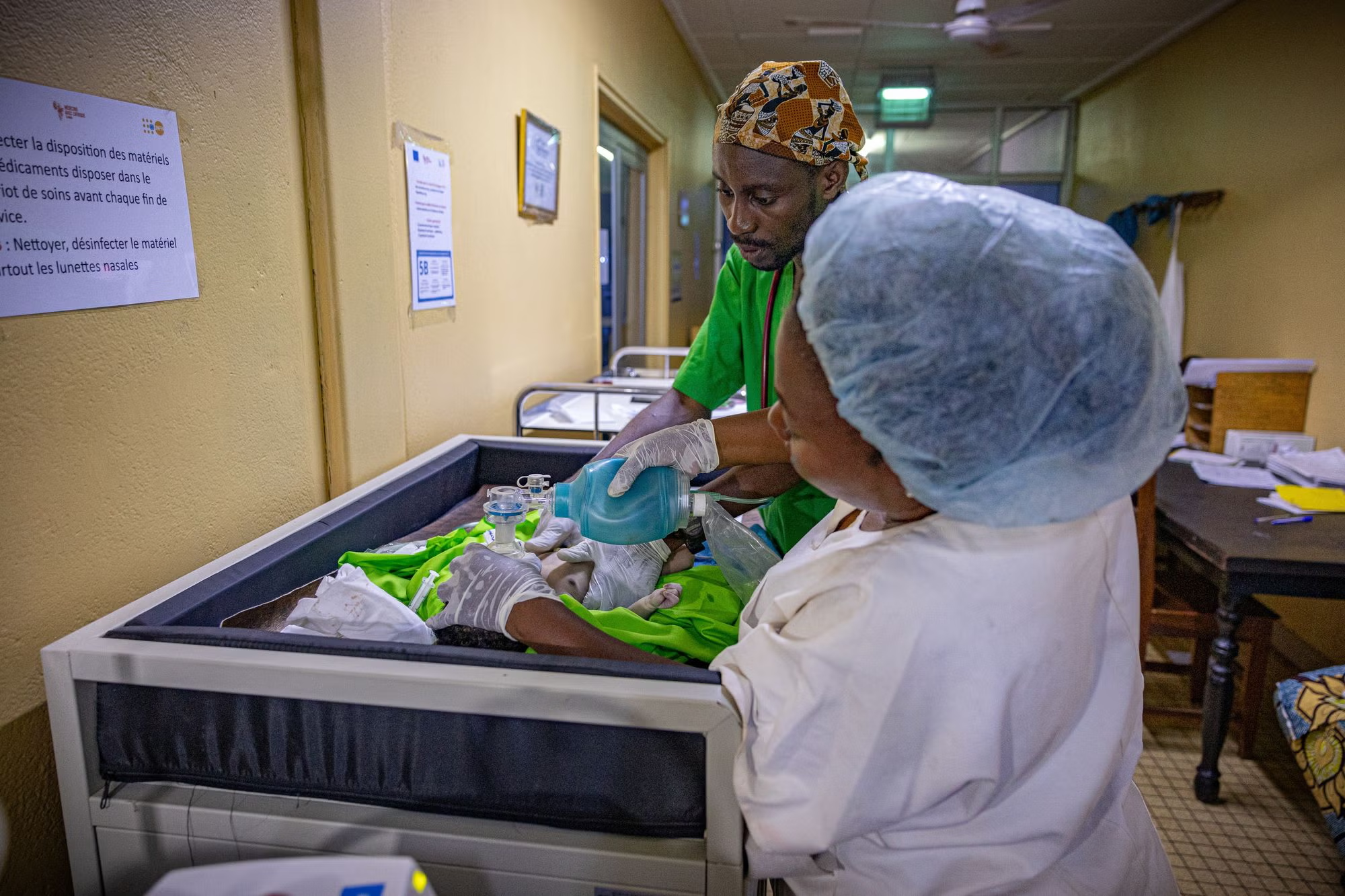
The muted beeps of the neonatal intensive care unit are drowned out by a sudden scramble of sound. A bundle is rushed into the corridor of this hospital in the Central African Republic (CAR) with a gaggle of people in its wake.
Under the swaddle of cloth is a newborn baby girl, eyes closed, her chest heaving with tortured, syncopated breaths. “unanimously”
Nurses quickly connect the baby up to a confusion of monitors, tubes and drips. A roar of a ventilator kicks in. The baby’s grandmother looks on anxiously.
Emmaus Johann, the doctor and seventh-year medical student, looks grimly at the statistics on the monitor. They have tried intubation, ventilation and now CPR. Blood is seeping onto the blanket. The newborn’s face goes grey. Her tiny body gives in.
“There was no ambulance. The only ambulance had taken a different child. There is nothing else out there,” the doctor says as the baby’s grandmother shatters into sobs in the background.
“They came just like that… by motorbike,” he continues, trailing off.
This is the only dedicated paediatric hospital in the whole of CAR, a small landlocked country of five million people that suffers from some of the highest maternal and early infant mortality rates in the world.
This little girl has been brought in from a rural area 10km outside the capital. After a difficult labour, she was struggling with birth asphyxia. She had been on this earth for about two hours, and had spent almost all of it on the back of a speeding motorcycle in the desperate rush to get here.
“There’s a lack of equipment and care. There should be a neonatology service out there. But there isn’t one,” Dr Johann continues.
“If the baby comes to us this late without oxygen, we cannot resuscitate her; it’s part of our daily routine,” he adds quietly.
And the fear is this horrific situation is only going to get worse.
For centuries, giving birth was one of the most dangerous conditions a woman could go through: mothers and their babies died regularly in childbirth.
But over the last 25 years, that changed. Combined global efforts saw maternal mortality plunge by 40 per cent. Until now.
Now, the United Nations, aid agencies and humanitarian organisations are all sounding the alarm that progress is stalling, and in some cases reversing, across the world, including even in the UK.
The biggest factor is unprecedented aid cuts, first triggered by Donald Trump’s gutting of USAID in 2025, followed by European countries, including the UK, channelling foreign aid into defence. Compounding the crisis is an unprecedented level of conflict worldwide. Researchers say that 2025 saw the highest number of conflicts between states since World War II, and the highest number of fatalities recorded since the Rwandan genocide.
Although there is no aggregated global data since aid cuts were introduced last year, the signs are grim.
In the CAR, not only does it struggle with some of the highest maternal and infant mortality rates in the world and its own internal conflict, it is now dealing with an influx of refugees from neighbouring war-ravaged Sudan.
Women in the CAR are 60 times more likely to die in pregnancy or childbirth than in the United Kingdom, according to United Nations’s latest data. For every 100,000 births in the country, 829 women die.
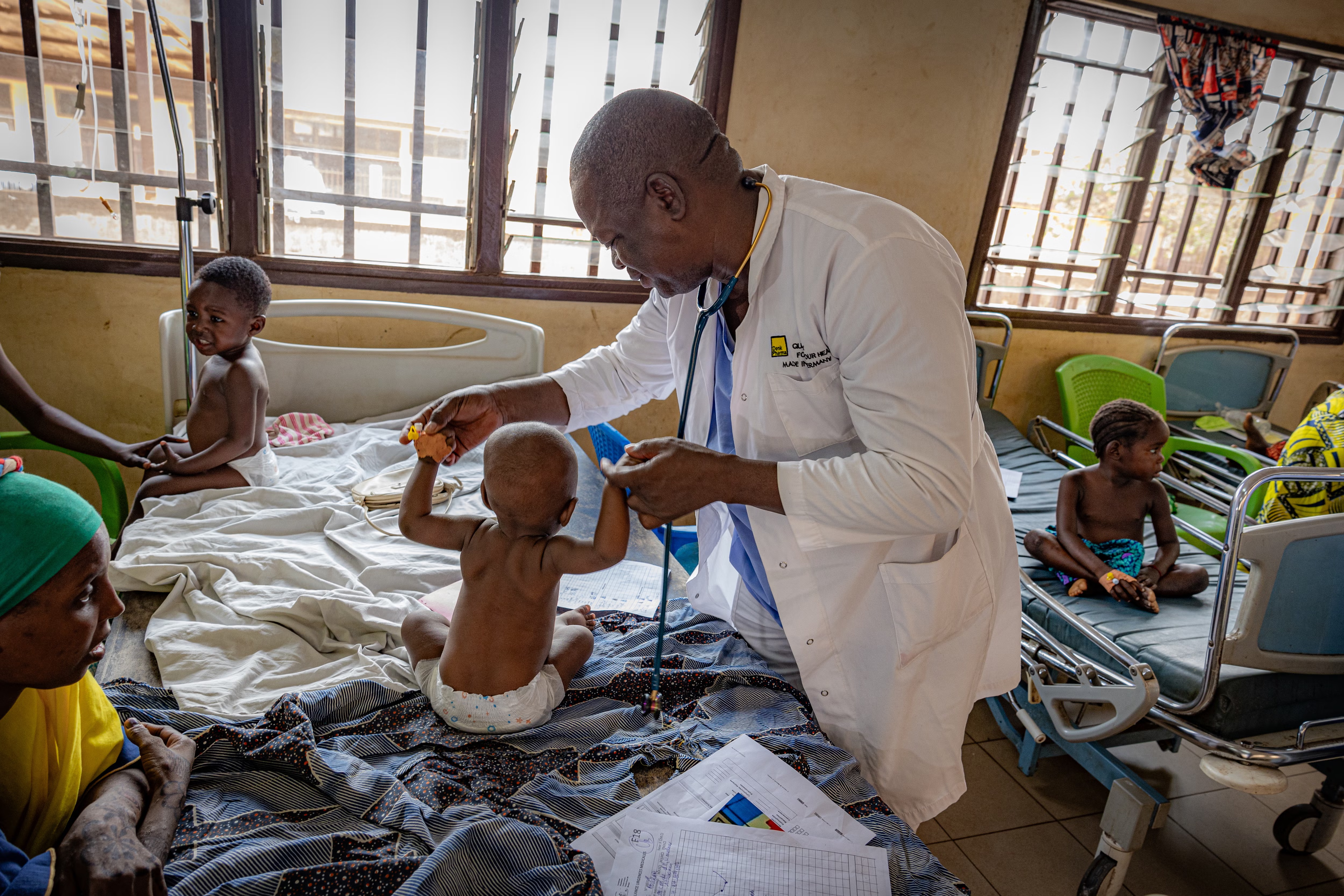
At the only paediatric hospital in the country, Dr Kango Semplice, head of the emergency department, says this is translating into deaths.
“The cuts were sudden. The country had just been getting back on its feet after conflict.
“We’ve had no funding since last year. With the little money that we have, we are targeting the children that can be treated free of charge. I can assure you there will be deaths, both among babies and their mothers.”
Among the projects slashed were programmes led by the United Nations Population Fund (UNFPA), which lost $3m in funding alone.
New data shows 11 million people have lost access to their essential sexual and reproductive health and protection services. Almost 1,100 health facilities and mobile clinics were forced to close, while an additional 727 facilities were disrupted, operating with reduced staff, limited hours or shortages of medicines and supplies. Almost 6,000 health service providers lost their jobs, including frontline health workers and midwives.
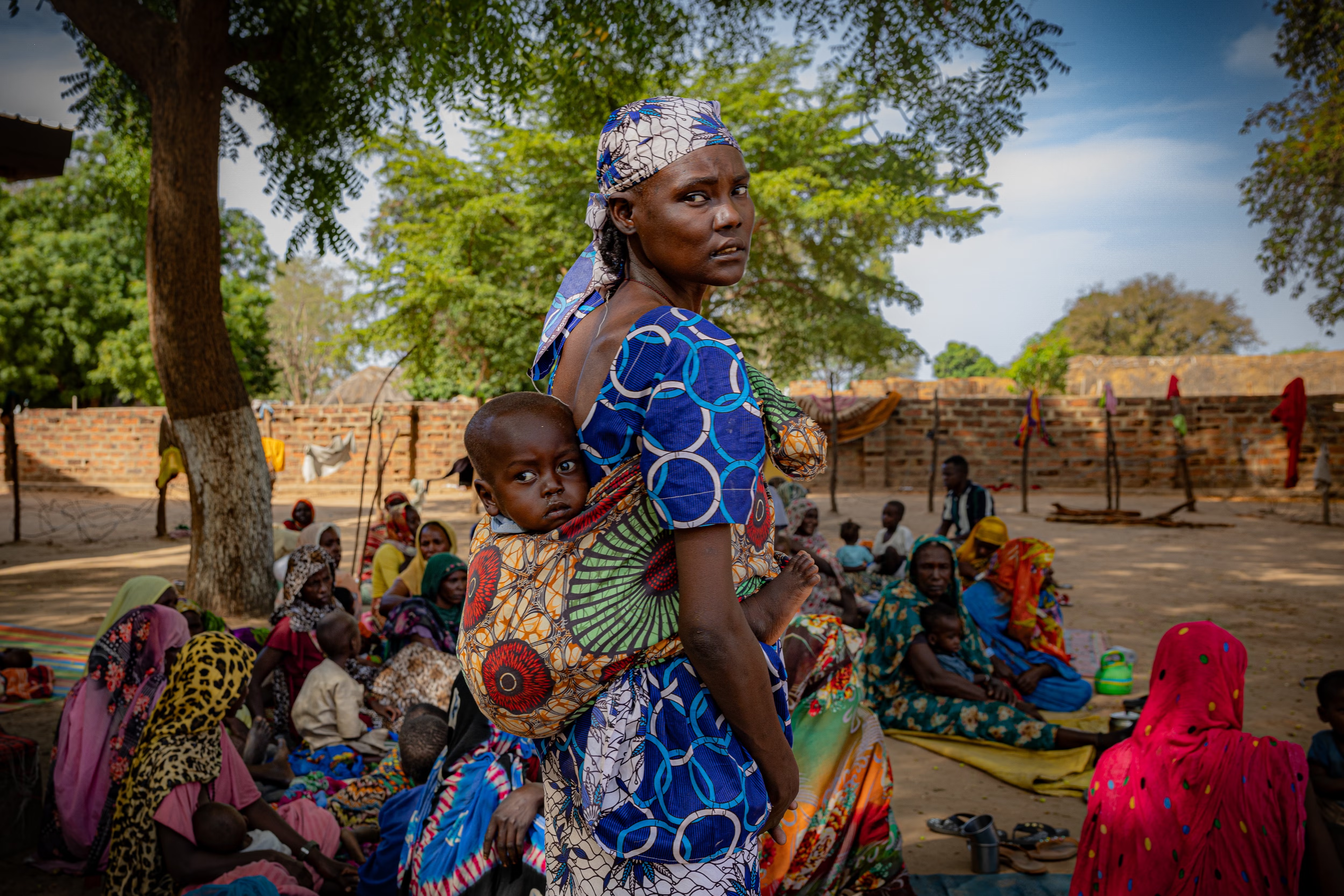
“When services get shut down, when maternity wards close, the mortality rate rises. It’s as simple as that,” explains Monica Ferro, head of UNFPA in London. “That will mean that they will have no skilled birth attendants. They will have no access to medicines to treat the most preventable causes of maternal death.
“This is completely unacceptable. No woman should die of childbirth, giving life.”
Conflict, climate change, and the weight of external debt are preventing countries like the CAR from becoming less dependent on external help, she continues.
”This is the perfect storm gathering. You have more people moving, more people in need and health systems that are stretched to the limit with less funding.”
In Birao, located just 60km from the Sudanese border, families are camping in the courtyard of the city’s hospital, which only has 60 beds, covering a local and refugee influx of more than 40,000 people. Many of them are pregnant mothers and their children, piling pressure on the already inadequate medical centres.
At the maternity ward, eight of the 12 medics lost their jobs following aid cuts over the last year, including all four midwives.
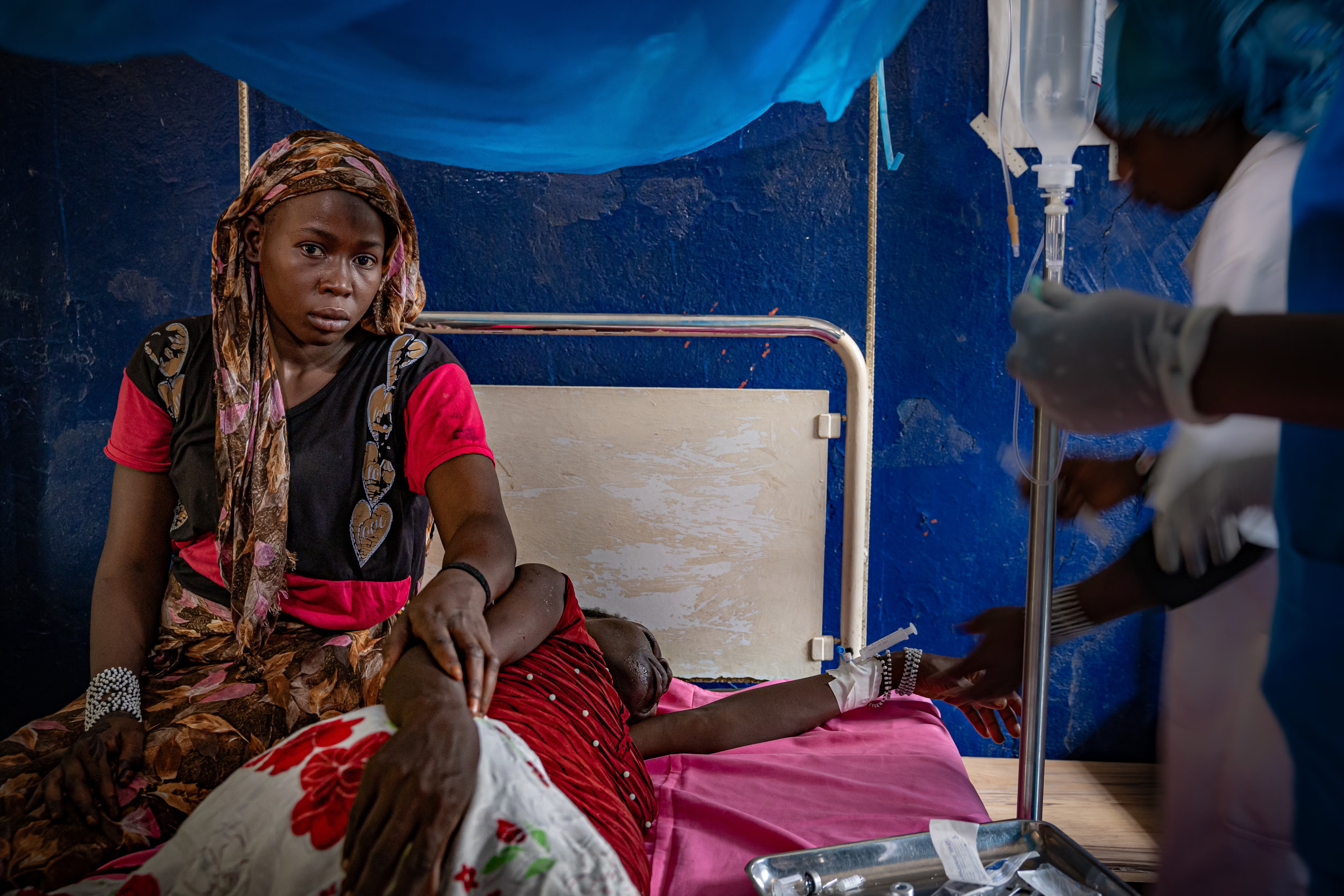
Delphine Zanaba, an assistant nurse, manages hundreds of consultations alone – at a time where the number of pregnant women coming every day has increased threefold.
She tries to comfort, Amna, 37, a mother-of-six, who screaming in agony just hours after losing her baby at nine months, and nearly bleeding to death herself.
Zanaba says she came in this morning with malaria and her baby was breech and stillborn – both of which could have been prevented.
“The pregnancy hadn’t been monitored at all, this is a recurring problem. They don’t come for a single consultation for the entire pregnancy, not even one.”
Her niece, Radiya, 24, who fled slaughter at the hands of militants in Darfur with her on foot last year, says Amna would have have pre-natal consultations and been treated if the mobile clinics in the nearby refugee camp where they live had not closed.
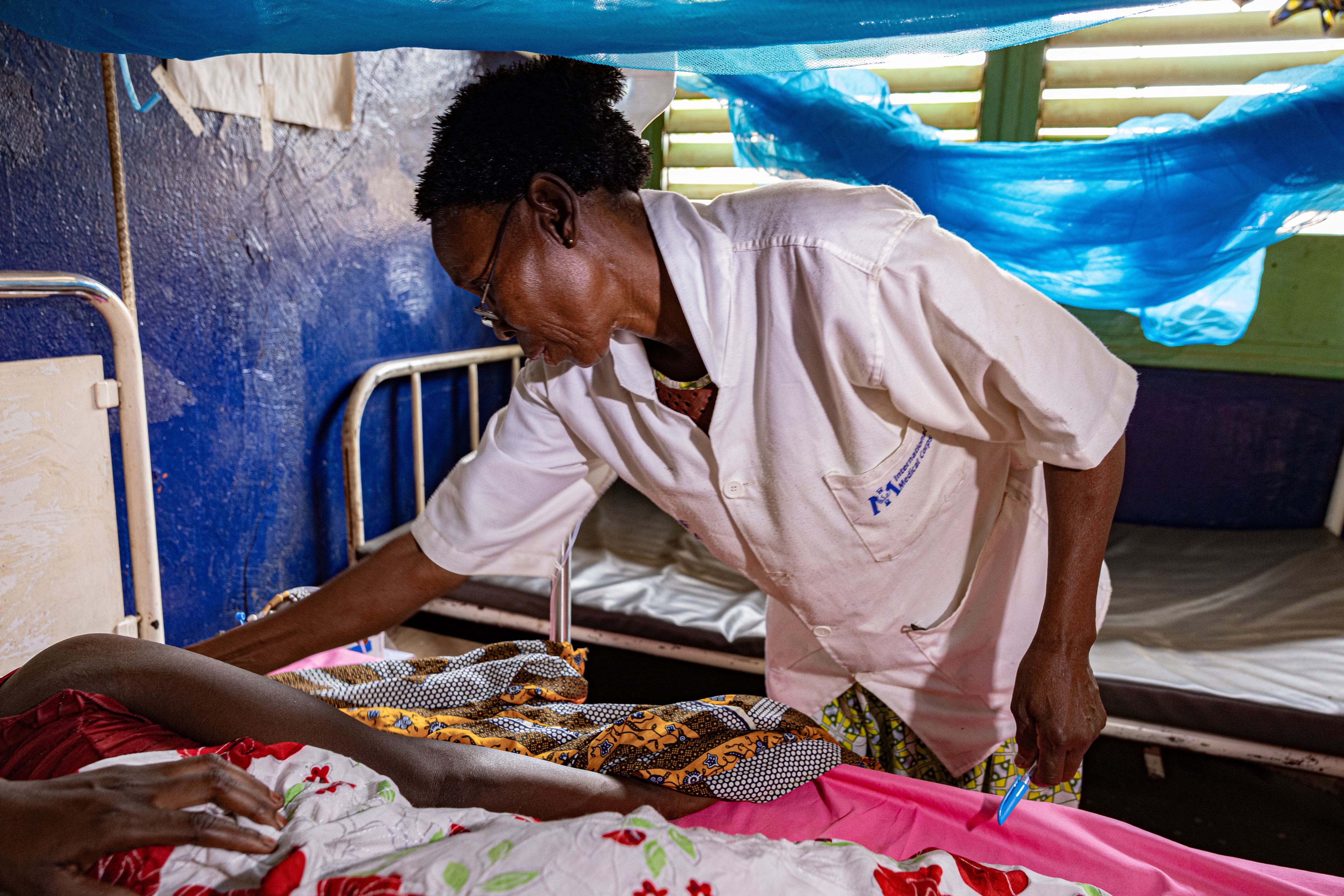
“She keeps asking for her mother and saying she doesn’t want to live any more,” she adds in distress.
“There used to be many more midwives… If this was available the baby would have survived.”
Outside the ward, the hospital’s lead doctor, Ngonzo Lezin, explains they are the only hospital in a 20km radius. Since the massive reduction in aid, women have to pay for their care and so are not coming in any more.
“Women are forced to give birth at home, in the camps. The numbers of deaths will increase, both mothers and children. It will be distressing not just for Birao but for the country.”
In the nearby refugee camp, a mobile clinic and safe space supported by UNFPA used to provide medical care, pre and post natal care and hospital transport for pregnant women. It was one of four such spaces in Birao serving thousands of women. Those have closed without US funding, along with two US-backed health facilities.
UNFPA’s programme officer Marie-Justine Mamba-Ibingui shows off what are now just piles of rubble.
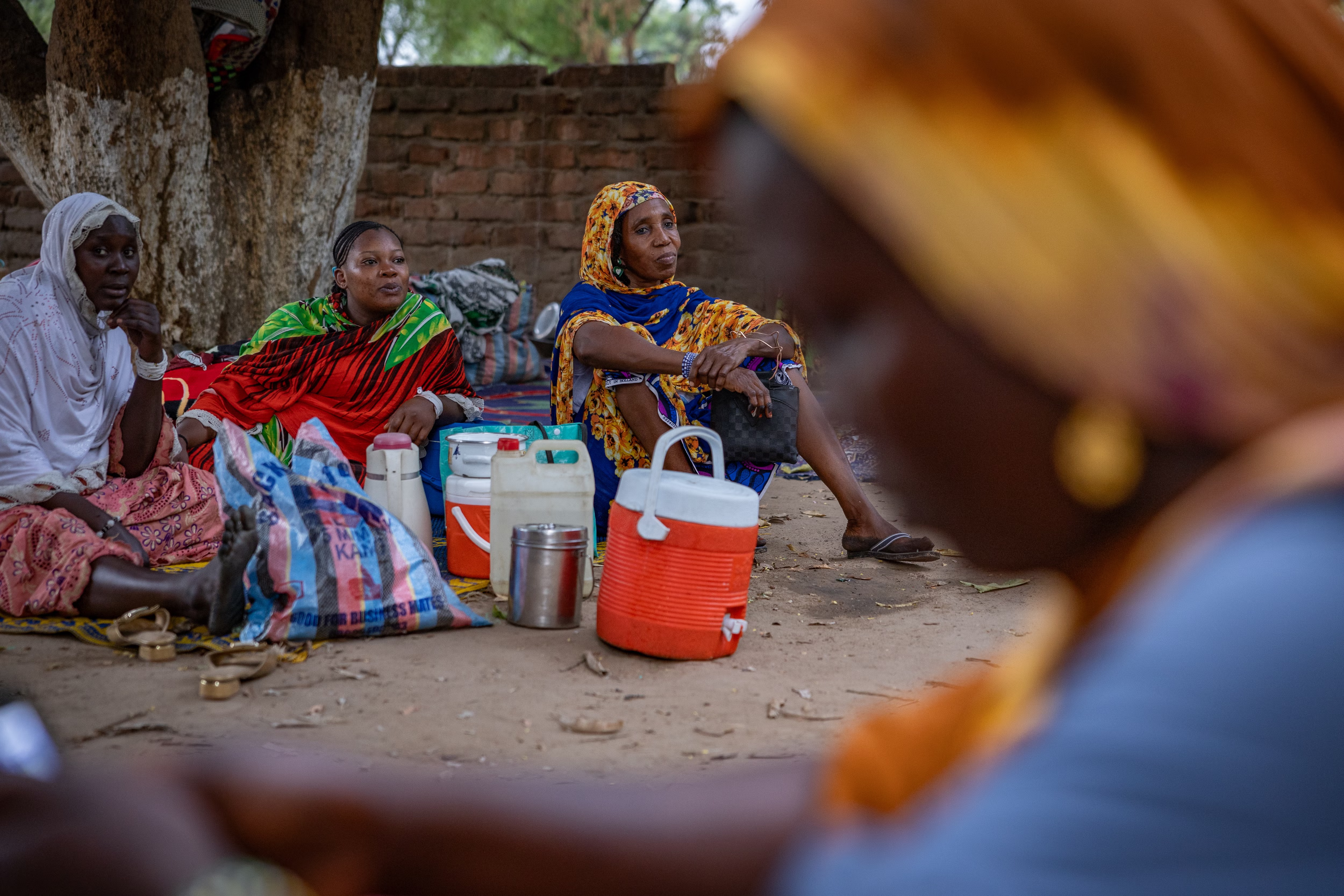
“The women bitterly regretted the closure of the site here. And for me, too, it is bitter to see women taking risks when they want to give life. It’s heartbreaking,” she adds.
Mothers, who are waiting by what was the centre, recount their horror stories.
There, Busayna, 25, a mother-of-five who gave birth seven months ago, nearly died after she had to walk kilometres mid labour to the hospital because there were no longer services in the camp.
Busayna’s husband was murdered by militants as they fled El Fasher – where human rights experts believe a genocide has taken place – on a donkey. En route armed groups tried to rape the women, and when their husbands intervened, killed all the men.
“I’m just too exhausted, there are so many troubles. My husband is dead and we ended up on the street.”
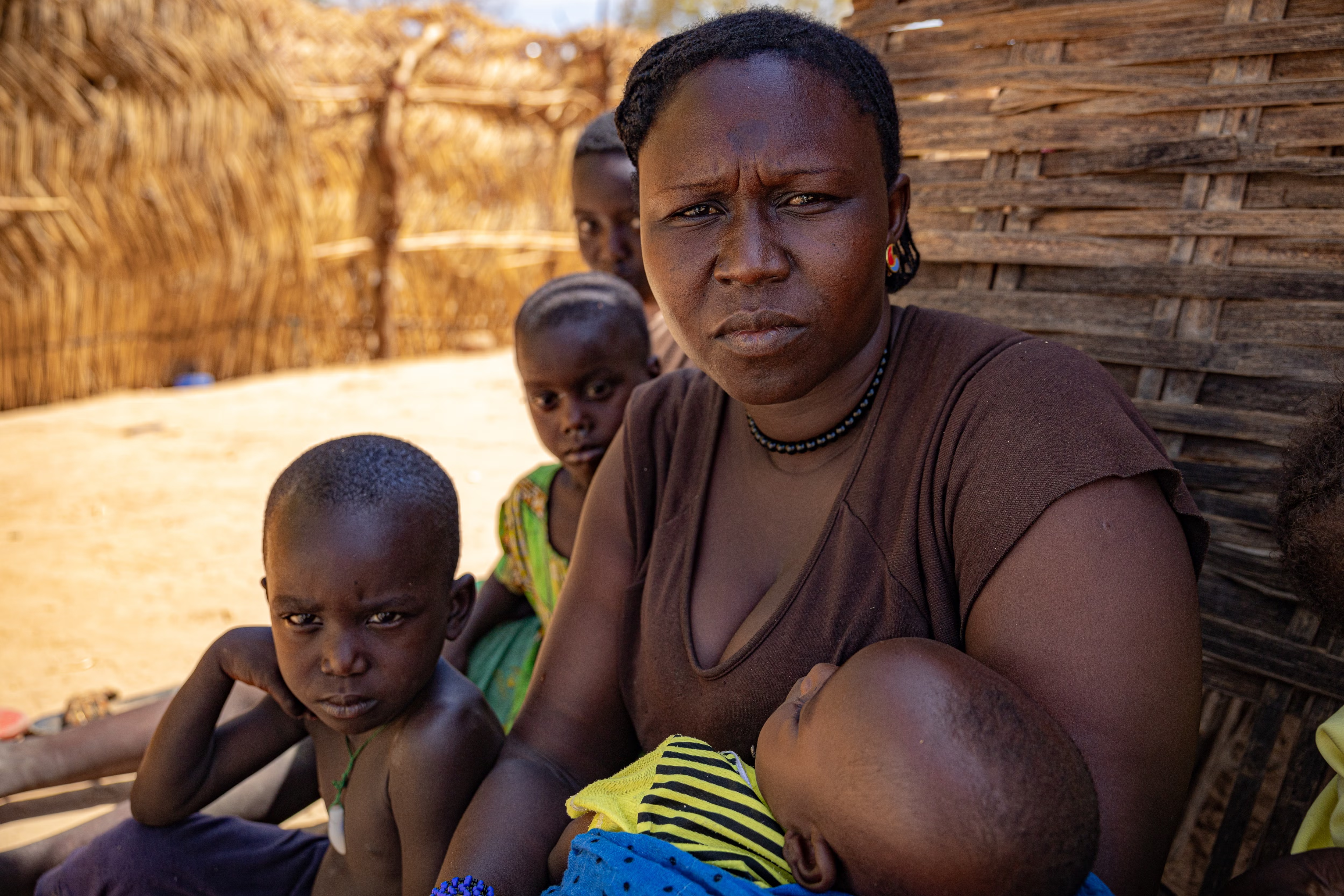
“When it was time for me to give birth, I had to walk to the hospital. They told me there was no transportation available at night, so I went on foot. There was no aftercare. I gave birth that same night and left immediately.”
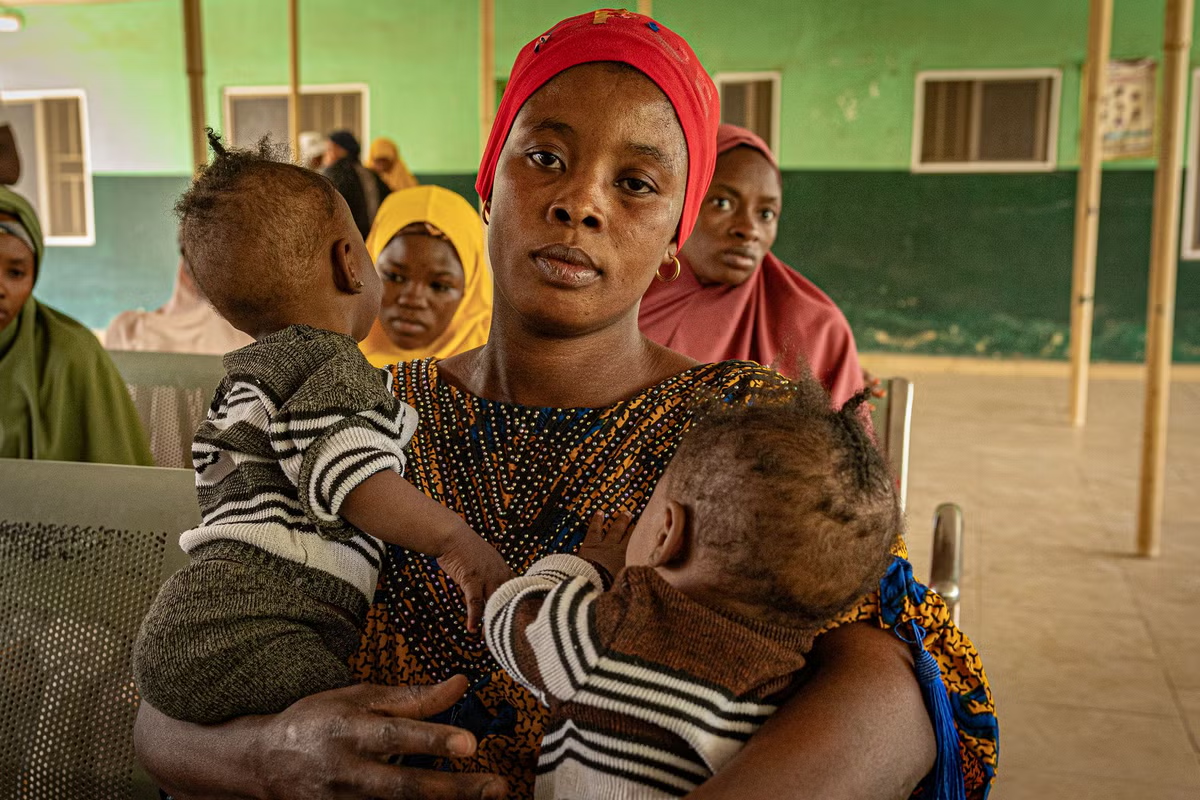
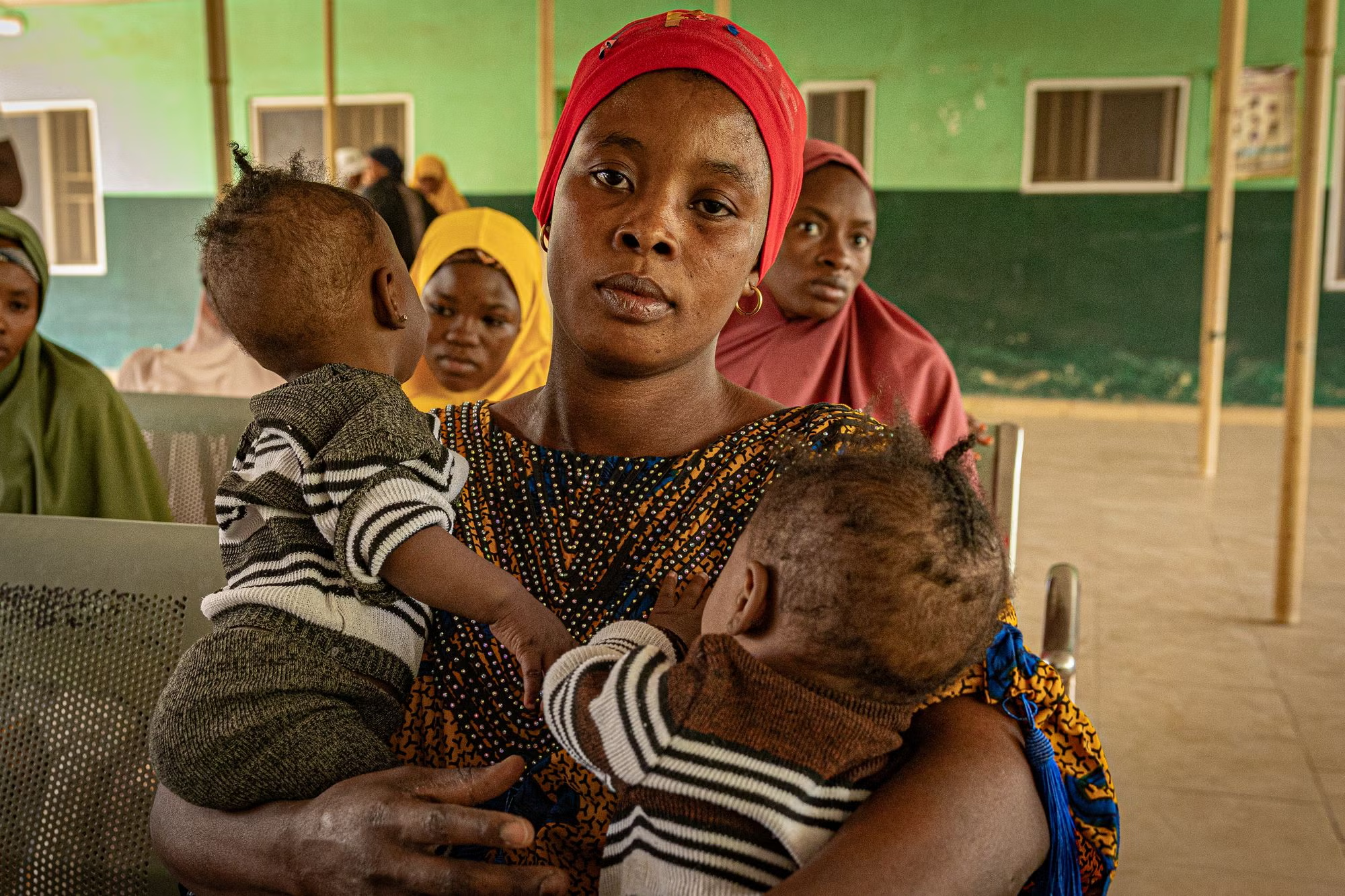
This is playing out all over the world. In primary healthcare facilities in Nigeria’s restive northern states, mothers in the waiting rooms recount similar stories.
Nigeria has long been the worst place to give birth on earth. The country accounts for well over a quarter, or 29 per cent, of all estimated maternal deaths worldwide. In 2023 there were 75,000 maternal deaths – one death every seven minutes.
Part of the issue is the lack of doctors. In Nigeria, there is only one doctor to 9,000 patients; in the UK, that ratio is one to around 1,700.
That means primary healthcare centres, staffed by nurses and midwives, are often the first and only port of call for pregnant women, despite having almost no supplies.
Blessing’s sister died, as did her baby, after three gruelling days in labour, because the family didn’t have the money to take her to hospital. When Blessing was pregnant with twins and showing all the signs of deadly pre-eclampsia, she was terrified she might follow the same fate.
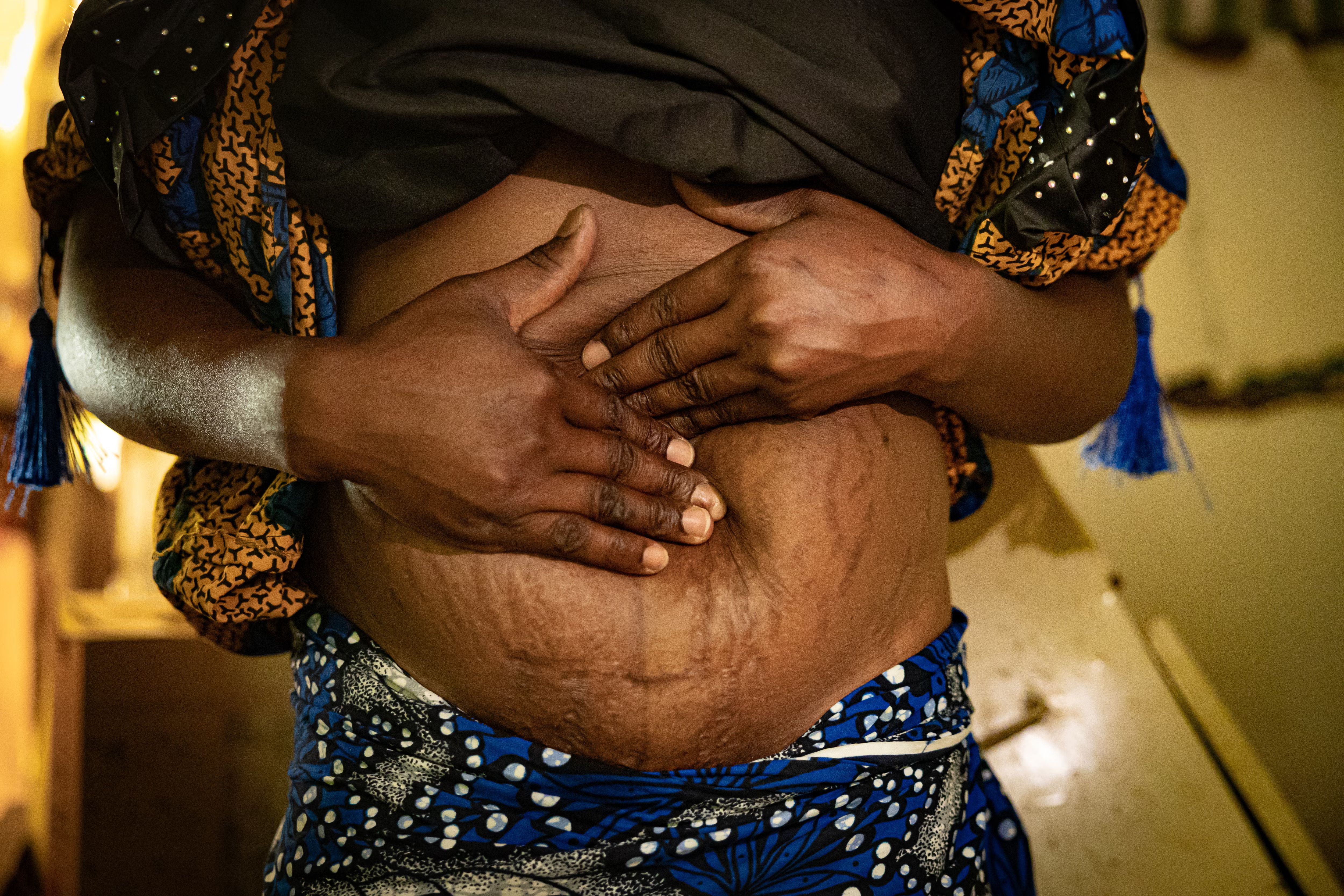
“It was not easy for me, I was very scared. I had a seizure, I even collapsed. They said they needed to operate on me and I started crying because I know that my husband cannot afford the money,” she continues, explaining the hospital bills were the equivalent of two years’ salary. Family and friends started frantically crowdsourcing the funds.
“I thank God for my life and that my babies survived.”
The facility manager of this centre in Adamawa state north-east Nigeria, Simka Zamani, says the biggest issue is that they sometimes only get 30 minutes of power a day.
They also lack drugs and staff to help with the influx of women who only attend these centres because they can’t afford hospital bills. This centre used to be supported by NGOs who helped purchase essential drugs and equipment for the most underprivileged women, but that has all gone in the last year.
Similar concerns are voiced at a second primary health centre. There, the handful of women in the waiting room had lost 15 babies between them. Asina lost her baby just two days before.
Hawwa, 40, who is pregnant with her 13th child, said six of her babies have died in childbirth, and has got to the point where she dreads being pregnant, but a lack of funding means she has no access to family planning. “It is very traumatising because where you give birth to a child and they survive, I fear the next one will die. I always fear the one I’m carrying will die,” she continues.
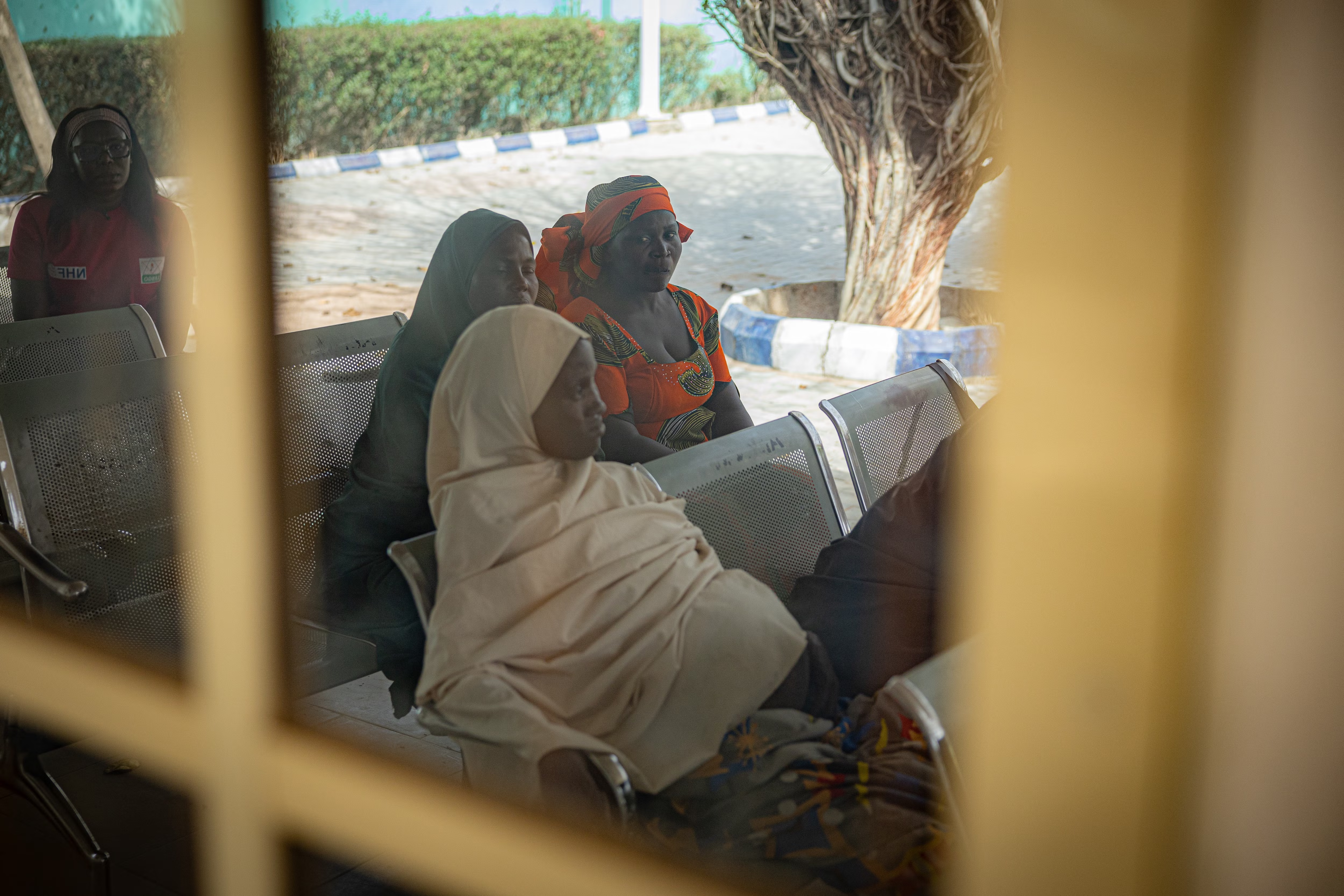
Nigerian health officials, like the doctors in CAR, fear that the situation will only get worse as funding cuts and conflict bite. Nigerian security forces have been battling a 12-year insurgency in the restive north of the country, as Boko Haram militants have morphs into multiple groups, including the so-called Islamic State.
The situation has got so bad that Donald Trump authorised multiple bombing raids on Nigeria at the end of 2025 and into this year.
“The cessation of the US funding was so abrupt, short notice, there was no adequate window for transition,” says Dr Sulaiman Saidu Bashir, executive chairman of Adamawa State Primary Healthcare Department.
“And if we don’t address this problem here, it may spill over to other places, and it contributes to a global burden.”
Back in the CAR, nurse Zanaba is working her way through dozens of women in a makeshift waiting room. Most of them are refugees with galling stories of escaping drone strikes and slaughter.
“No woman should unnecessarily in birth – we must stop this. I didn’t want to lose a mother. I don’t want to lose a mother – no more maternal deaths. It must stop now.”
This article has been produced as part of The Independent’s Rethinking Global Aid project