Editor’s Note: This report deals with postpartum mental health disorders and includes references to infanticide and suicide, which might be distressing for some readers. Please take care when reading.
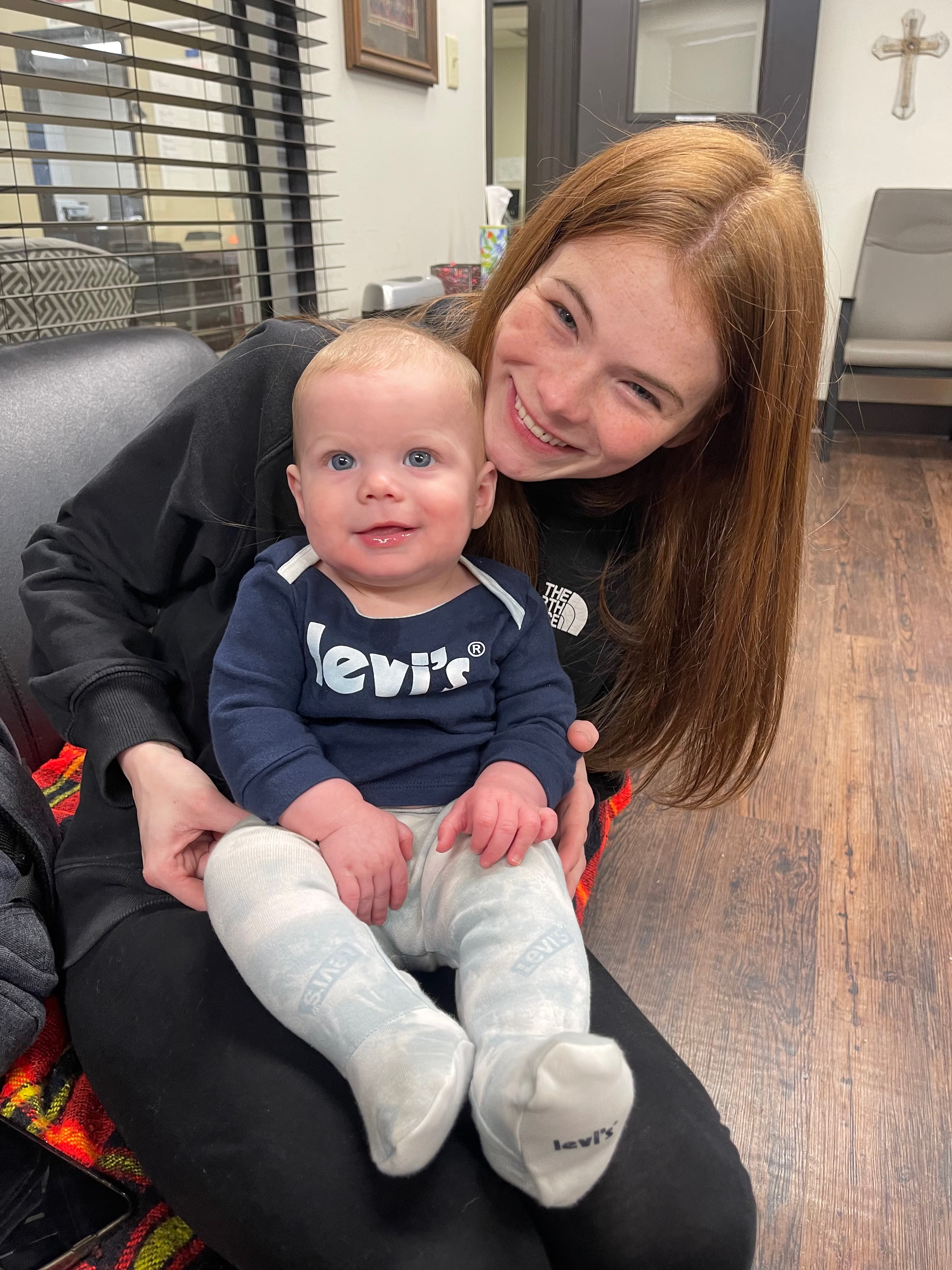
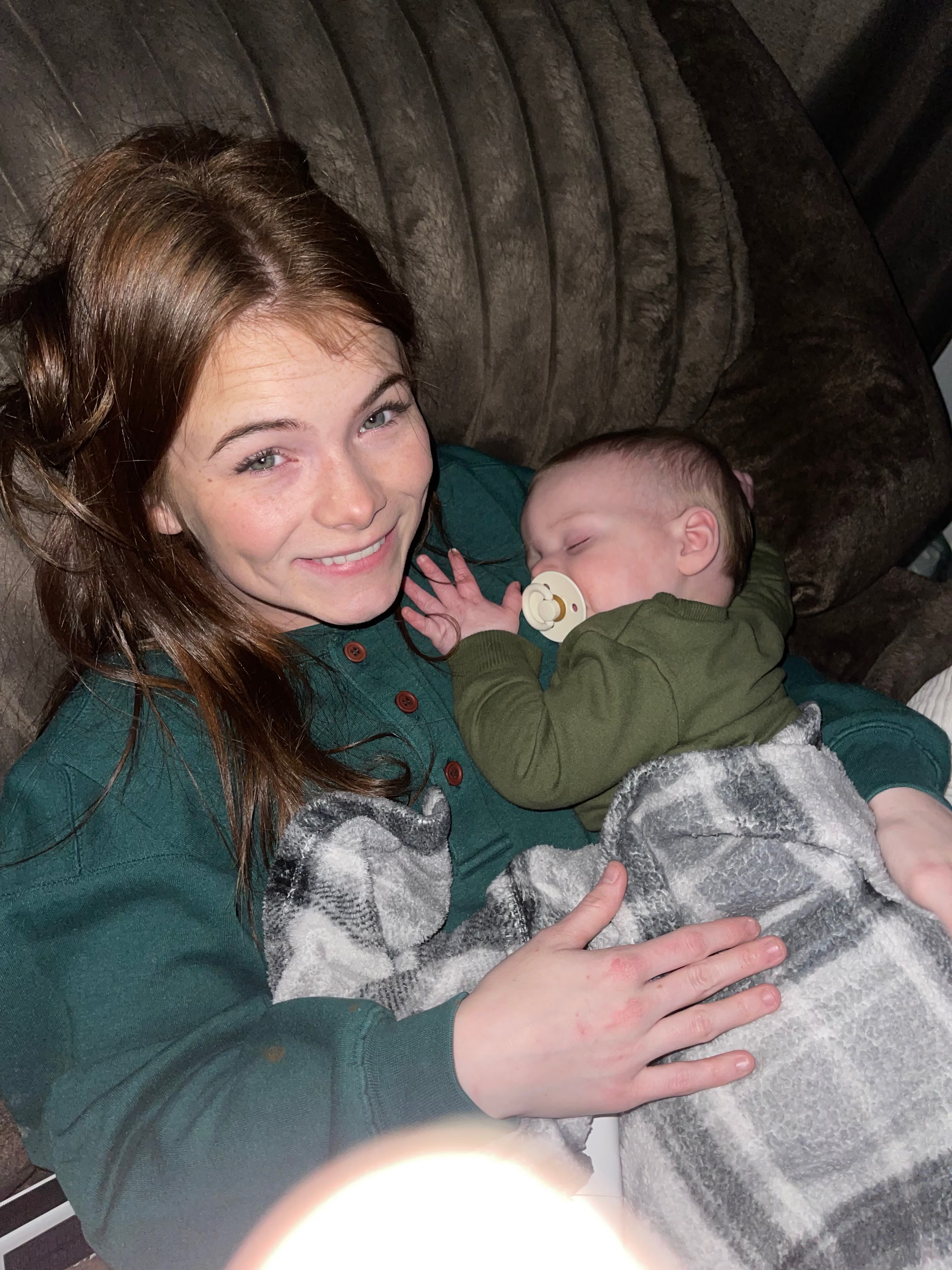
With her baby boy sitting happily on her lap, Stormi Griffin looked at the camera and smiled.
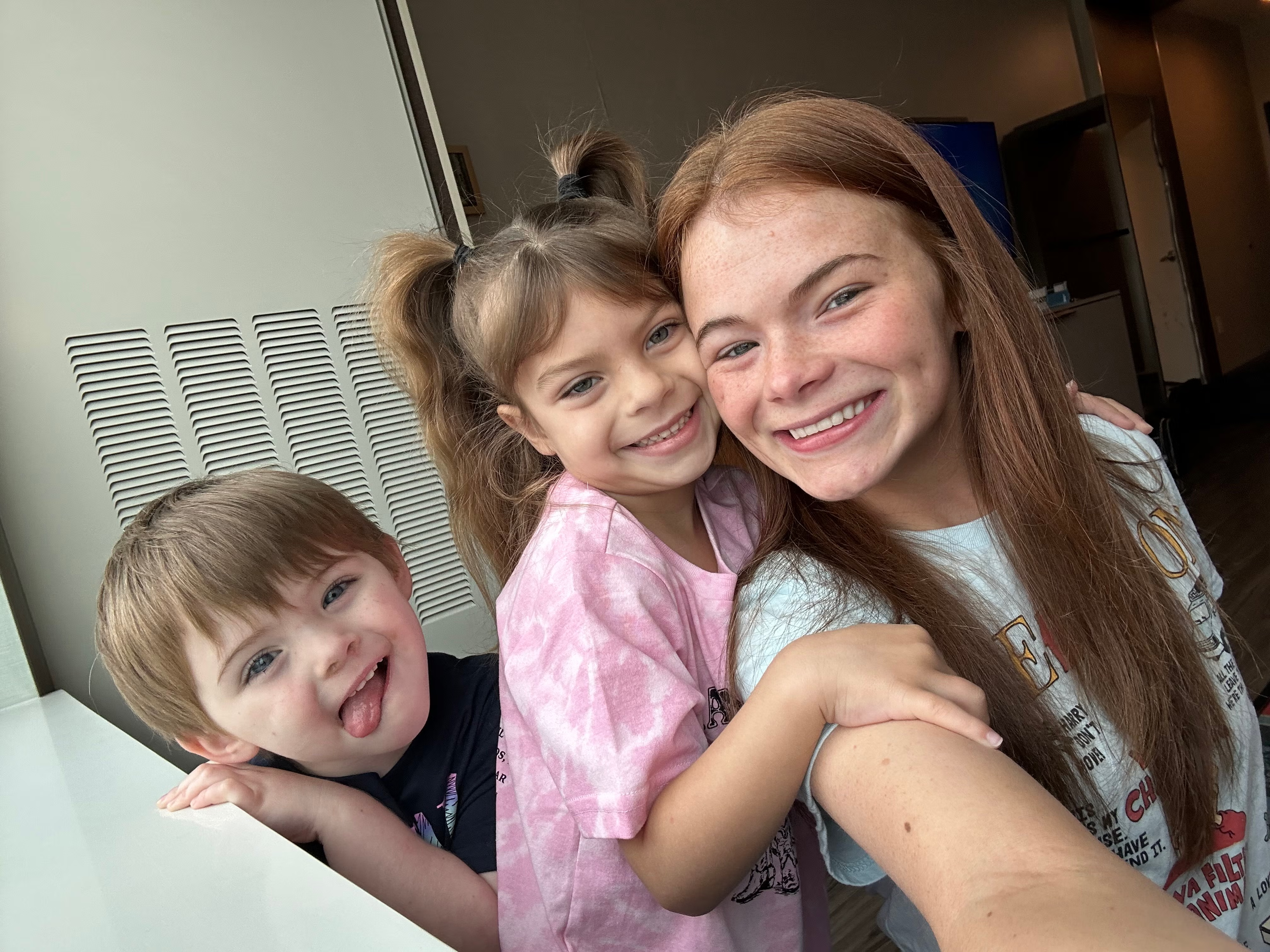
The photo, which she posted on TikTok along with images of her other two children, was not about “Pinterest-perfect” motherhood, she said, but to illustrate what she looked like in the throes of postpartum psychosis.
“You can look completely fine,” Griffin, 23, told The Independent. “It’s not just a crazy lady rocking herself in a straitjacket.”
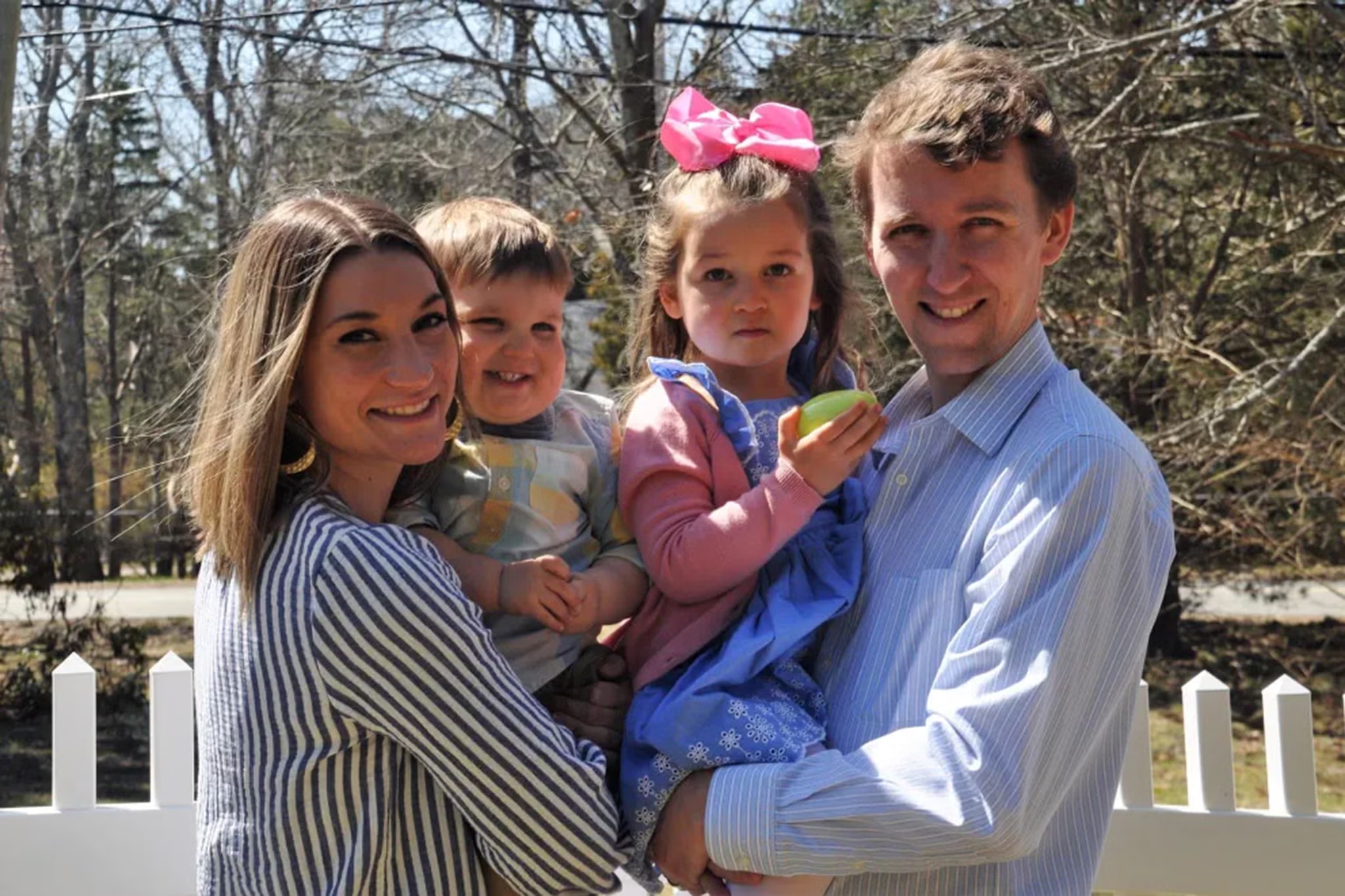
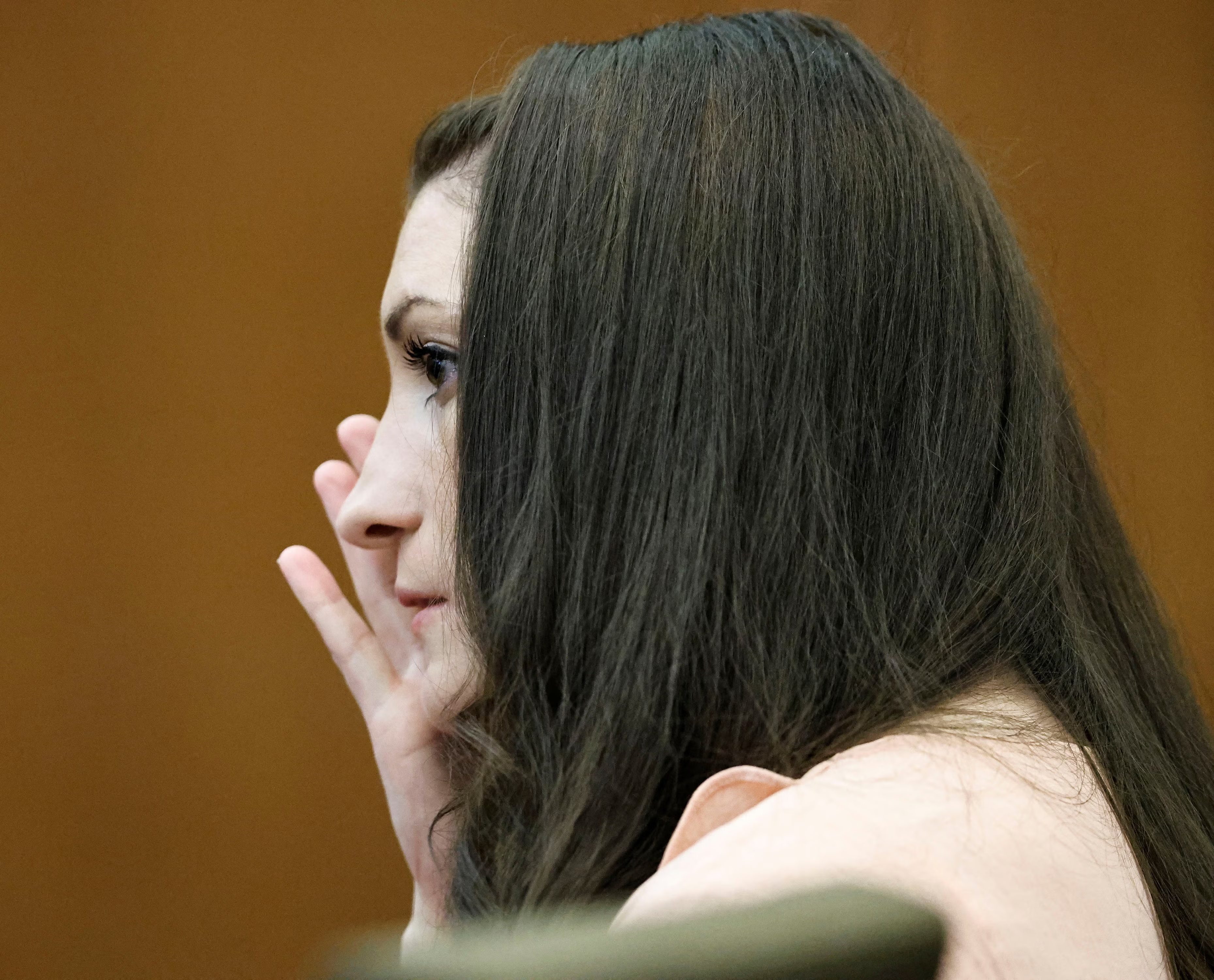
The mental health condition of postpartum psychosis has burst into public discussion with the murder trial of Massachusetts mother Lindsay Clancy, a former labor and delivery nurse, accused of killing her three children — 5-year-old Cora, 3-year-old Dawson, and 8-month-old Callan — and then trying to take her own life in 2023 at their Duxbury home.
Clancy’s defense team has argued that the 36-year-old is not criminally responsible for the murders, which took placeduring the onset of her postpartum psychosis. The prosecution portrayed the killings as a premeditated, deliberate act.
Griffin was one of three mothers who experienced their own postpartum mental health crisis and spoke to The Independent after following Clancy’s trial.
On one hand, the case has seen an outpouring of support for Clancy with allies flocking to court in pink T-shirts reading: “She Needed Help.” But there has also been fierce condemnation from others who call Clancy “a monster.”
The case has sparked a national conversation about the failures of maternal care — and raised questions about how women are treated by the healthcare industry more widely in the U.S.
The reality of postpartum psychosis
Griffin, a former medical assistant and now a dance teacher, has Thomas, 4, Ethan, 1 and stepdaughter Ava, 6.
She was diagnosed with postpartum psychosis last year, a few months after Ethan’s birth. The mental health condition, a medical emergency which occurs in approximately one to two women per 1,000 births worldwide, is linked to hormonal changes, sleep deprivation, and stresses that follow childbirth, according to medical experts.
Postpartum psychosis is temporary and treatable with the right medication. It also differs from postpartum depression, which affects approximately one in seven women after they have a child.
At its most severe, Griffin, from Paris, Texas, said her symptoms included hearing voices and hallucinations that made her “lose touch with reality.”
Griffin, who said that mental illness runs in her family, was one of hundreds of women sharing their postpartum experiences on social media during Clancy’s trial. She posted the smiling picture with Ethan on her lap to show how “normal” you can appear from the outside.
“The main thing was just to show it’s not just a crazy lady rocking herself in a straitjacket,” she told The Independent. “You’re not just itching yourself and going crazy. You can look completely fine.”
Experts agree that mothers suffering from a mental health disorder around the time of giving birth often keep up appearances.
“She could be going about everyday tasks and errands while having intrusive thoughts, hearing voices,” said Wendy Davis, executive director of Postpartum Support International. Davis said the behavior is referred to as “masking.”
“From the outside, it’s often impossible to tell that things are very hard for her, that she’s suffering and possibly in danger. And the mother herself might not realize what she is experiencing is a mental health disorder that is temporary and treatable,” she explained.
‘I’m hearing voices, and I know they’re not there’
That was true for Griffin, who began to feel symptoms of depression and anxiety in July 2025, about two months after she had given birth. She was put on antidepressants and anti-anxiety medication, and said she improved for a short period. But then more alarming symptoms emerged in late September, lasting on and off until November.
“I suffered from visual and auditory hallucinations daily; I couldn’t sit still on [some] days; I had thoughts that were not my own, and I met the darkest parts of myself,” Griffin posted on TikTok.
The symptoms did not happen overnight, but “very much crept up” on her, she told The Independent.
“I heard voices that almost sounded like me, and then voices that I’ve never heard,” she said. “It made me question reality. The best way to describe it is it felt like I had an alter ego who just kept popping up, and the inside of me was like, ‘This isn’t right. This isn’t you.’”
She was diagnosed with postpartum psychosis and bipolar 2 disorder in September 2025 after her colleagues at the pediatric office where she then worked became concerned. Griffin returned to work six weeks postpartum due to the financial needs of her family, she said, and stressed that her former employer had offered her more maternity leave.
The nurse practitioner she worked for called her husband, Blake, and together they sat her down in a room and asked her what was going on. “I’m hearing voices, and I know they’re not there. I’m seeing things,” Griffin recalled telling them.
After that intervention, which Griffin credits with saving her life, she was put on different medication and met regularly with a therapist. But even after getting help, the mom “couldn’t seem to escape” the psychosis. She had a particularly dark period for a few weeks September and October.
“It was like being in a corn maze with no real end in a horror movie,” Griffin explained. “I just couldn’t get out of it.”
Mood stabilizers helped bring Griffin “back to reality,” she said. But out of caution, her husband was able to take time off from work to be at home, so that she was not left alone with the children.
“As much as I’m terrified of the sentence, I was a danger to myself. I was a danger to others,” Griffin said. “I could have easily been a danger to my children. And if I didn’t have that help, if I didn’t have those people fighting for me, I’m confident that I would not be here.”
“I had people putting their lives on pause to come sit with me, just to make sure that I was okay and to make sure that my children were okay,” she added.
It took time, but once doctors had Griffin on medication that worked for her, she started to improve. The mom said she fears what could have happened had her doctors left her on the medication that was proving ineffective at the start of her psychosis.
“I absolutely would have hurt myself, possibly someone else,” she said.
“Whether that was in a fit of rage and I wrecked my car into someone, if I intentionally took my own life, and if I could have been in a rage and snapped at my children out of despair and depression, which is why I’m so grateful that everyone else around me was able to see that I was not ok and take what I said seriously.”
Griffin doesn’t even recognize the woman she was nine months ago, thanks to her supportive family and the medical care she received.
Mental health professionals testified that Clancy didn’t show signs of psychosis. Prosecutors in Clancy’s trial alleged the mom “lied” to her mental healthcare providers about her dark thoughts, purposely didn’t take the correct dosage of medication, and argued that she received an “abundance of help, an abundance of care.”
They said the U.S. healthcare system was “not on trial here.”
In closing arguments, Clancy’s defense attorney, Kevin Reddington, said the mom’s mental health spiraled because of “that damned medicine and the lousy medical care that she got.”
Griffin said she believed that “luck” played a significant role in the care she received.
“It’s why the Lindsay Clancy trial is heartbreaking…to know that I went through something so similar, and so many doors were busted down for me,” Griffin said. “And to know that there was another woman who went through that who didn’t have [the] same is why it’s so controversial and upsetting.”
“It makes me very much want to get up and scream that all moms deserve help,” Griffin added.
Staying consistent with her medication, therapy, and doctor’s visits every month is essential, but now Griffin said she is in “a much better place.”
‘I just wanted them to take that baby away from me’
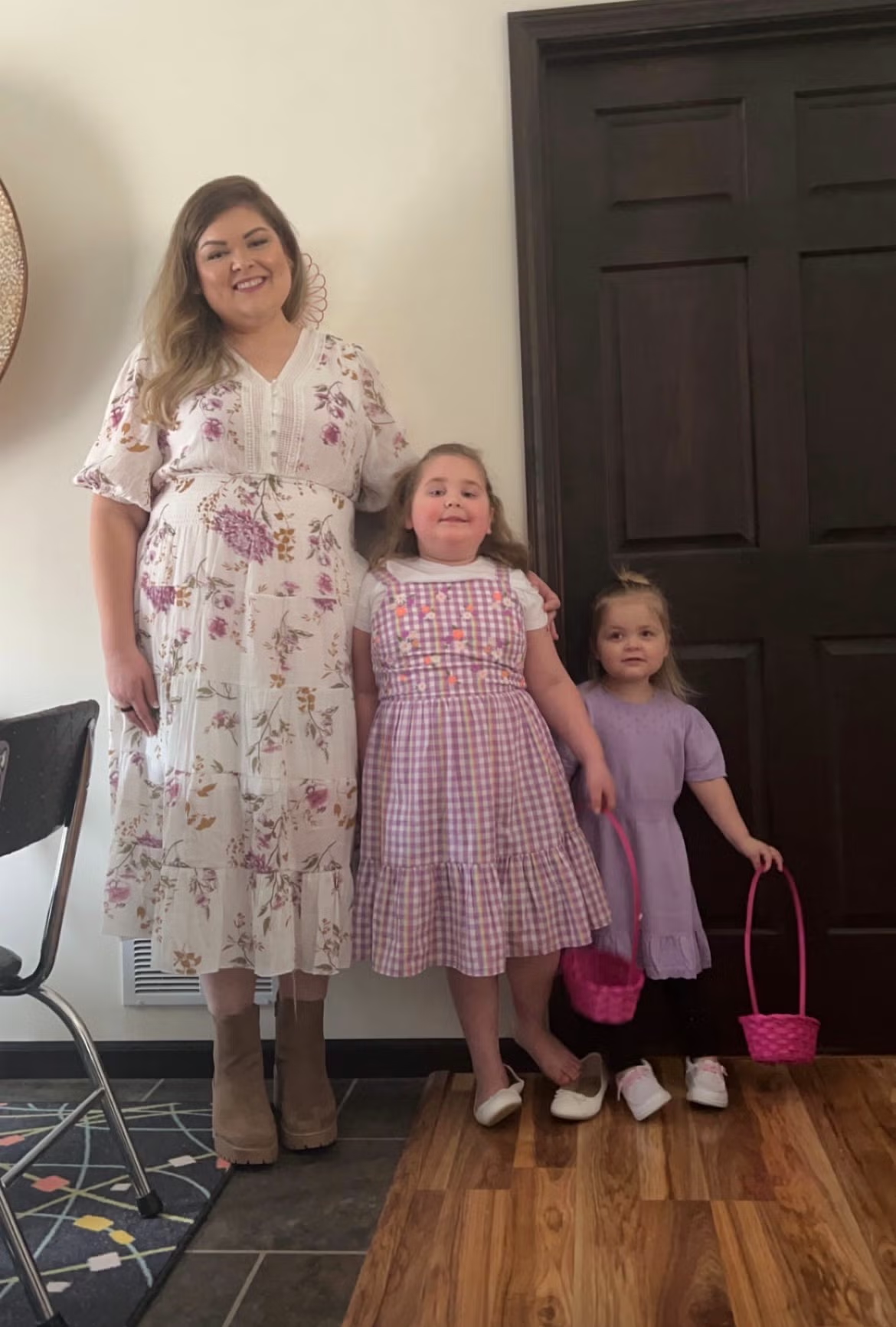
At first, Wisconsin mom Onna Wallace struggled to follow Clancy’s trial because it triggered memories of her own postpartum mental health struggles eight years ago. During that time, the 38-year-old makeup artist said she felt like a “failure” as a mom and at her lowest point considered taking her own life.
Wallace, from Madison, had always dreamed of becoming a mom, but after a difficult pregnancy and a traumatic birth with her firstborn, Lachlan, now 8, the image she had of motherhood was nothing like the reality.
“The second they laid that baby on my chest, it was like a switch flipped. It was just the strangest feeling, and I just wanted them to take that baby away from me,” she recalled.
There was more trauma after the birth when Wallace developed postpartum preeclampsia, a serious condition related to high blood pressure that can cause strokes and blood clots. Her mental health spiraled.
“I got more anxious and more sad. I couldn’t eat. I could hardly sleep. I was so exhausted, but I just couldn’t,” Wallace said. “And even though I needed some sort of break, I couldn’t leave my baby, and couldn’t trust her with anybody else, but yet at the same time, I felt like I didn’t want her.”
Wallace said she felt alone and, despite having a supportive family, none of them understood what she was going through. “I was so embarrassed, and it just got to a point where I wanted to die,” she recalled. “I didn’t want to hurt my child. I wanted to hurt myself.”
The intensity of those first six months, when her baby had colic and cried “for six straight months,” was too much to bear. In a moment of crisis, Wallace said she texted a number for support that she found online.
“I always say that number saved my life because I texted it, and they talked me down,” she said. “Just to have somebody say, ‘You’re a good mom, you’re not alone, this is okay, and other moms feel this way too.’ I’d never heard that before.”
The memories from that time had faded until Clancy’s trial.
“I just was like, this will break me to read, because I know exactly how she was feeling,” Wallace said of Clancy. “I just could not fathom being in that much of a darkness. I think just how terribly she was failed by the medical system.”
‘My brain was constantly creating these horrific scenarios’
Sarah Curtis, a 37-year-old mom from Florida’s Treasure Cove region, has been listening to daily podcasts about Clancy’s trial. She opened up about the intrusive thoughts she experienced postpartum 10 years ago in light of the case.
Curtis, mom to a boy and a girl aged 10 and 12, said she struggled with postpartum depression, anxiety, and OCD with both children that stemmed from losing her first child in 2011 after a miscarriage at 14 weeks.
“I am in no way minimizing the devastating loss of three innocent children. Three babies lost their lives. There are no words for that,” she said. “What we are supporting is the fact that this mom was begging for help and she was failed by her providers,” she said of Clancy. “I think about how differently my own story could have ended if someone hadn’t finally listened.”

The mom, who runs her own photography business, faces additional barriers to healthcare due to being self-employed.
While Curtis praised the “fantastic” care of a midwife and the hospital where she gave birth to her first child, she described a postnatal checkup with a nurse at home two days after being discharged as a “30-minute in and out.” After that, the next time she saw a health professional was six weeks later, when she said the nurse seemed more concerned about quizzing her on birth control than her mental health.
Instead, she would like providers to ask mothers more questions about how they are coping mentally, and make routine appointments in those early weeks and months more accessible. “Because that’s when I started really getting into darker thoughts and anxious,” she said. “But we don’t have anything.”
When Curtis was at home alone with a newborn and a toddler, she had disturbing thoughts that were “controlling her life.”
“I was so scared that something was gonna harm my children,” she said, emphasizing that she never experienced thoughts of hurting her kids.
“Anytime I would get in the car, I would envision a semi truck hitting us. I would get up constantly in the middle of the night because I was so scared someone was either coming in their window or watching through their window, kidnapping them out of their beds, or they would have a seizure and stop breathing,” she recalled.
Curtis struggled with intrusive thoughts for five years before a major panic attack finally pushed her into confiding in her husband, a veteran, who brought her to see his therapist. She was eventually diagnosed with generalized anxiety disorder, OCD, and panic disorder, which doctors told her all stemmed from postpartum.
When excerpts from Clancy’s journal entries were read to the court, where she described feeling as though she was “drowning every day” and “completely overwhelmed trying to take care of the three kids,” Curtis had to fast-forward.
“They were very hard to sit through,” she said. “Because it catapults you back into that moment where you’re sitting in such darkness and wondering, ‘what is wrong with me?’”
If you or someone you know needs mental health assistance right now, call or text 988, or visit 988lifeline.org to access online chat from the 988 Suicide and Crisis Lifeline. This is a free, confidential crisis hotline that is available to everyone 24 hours a day, seven days a week.
To learn more about postpartum mental health, visit Postpartum Support International at postpartum.net.
In the UK, you can speak to the Samaritans, in confidence, on 116 123 (UK and ROI) or visit the Samaritans website to find details of your nearest branch.