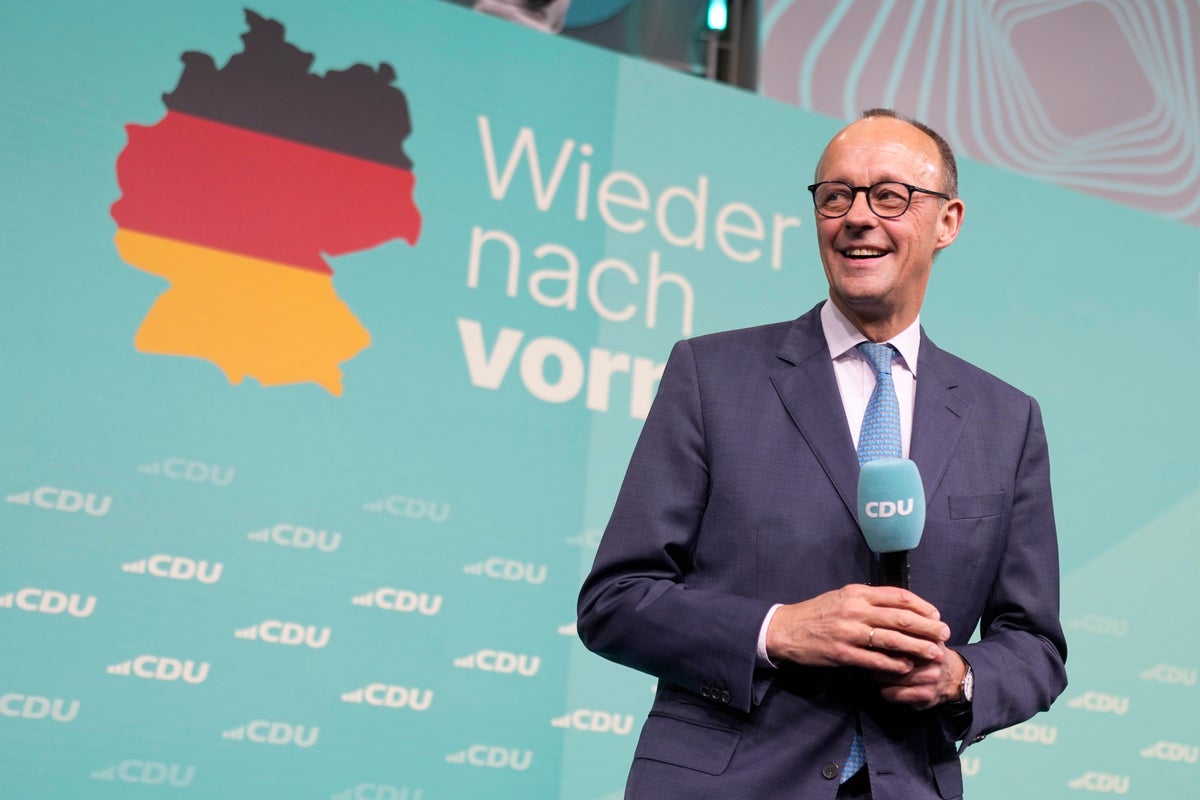
US president Donald Trump has hailed Sunday as a “great day for Germany” after an election in which conservative opposition leader Friedrich Merz has claimed victory.
Exit polls have now been published in Germany’s election, suggesting frontrunner Merz’s centre-right Christian Democratic Union (CDU) party has come out well in front, as the far-right AfD makes large gains.
In polling being watched closely across Europe and in the United States, the CDU/CSU bloc was on course to win first place with 28.5 per cent of the vote, followed by AfD with 20 per cent, marking the far-right party’s strongest result ever, public broadcaster ZDF reported.
Incumbent chancellor Olaf Scholz’s centre-left Social Democratic Party (SPD) garnered just 16.5 per cent of the vote, its worst-ever result, the projection showed.
Claiming victory, although the final official result is expected early on Monday, Merz said Germany’s conservatives will do everything they can to form a government capable of taking action as quickly as possible.
Following the exit polls, Trump wrote in a post on Truth Social: “Much like the USA, the people of Germany got tired of the no common sense agenda, especially on energy and immigration.”
But Merz took aim at the US president in blunt remarks after his victory, criticising the “ultimately outrageous” comments flowing from Washington during the campaign, comparing them to hostile interventions from Russia.
German president Frank-Walter Steinmeier called the snap election, the fourth in Germany’s history, after Scholz lost a vote of confidence on 15 January.
Conservatives win German election as far-right party surges to second place
Provisional results confirmed that mainstream conservatives led by Friedrich Merz won Germany’s national election, while a far-right party surged to become the nation’s second-largest.
The campaign was dominated by worries about the yearslong stagnation of Europe’s biggest economy and pressure to curb migration, something that caused friction after Mr Merz pushed hard in recent weeks for a tougher approach. It took place against a background of growing uncertainty over the future of Ukraine and Europe’s alliance with the United States.
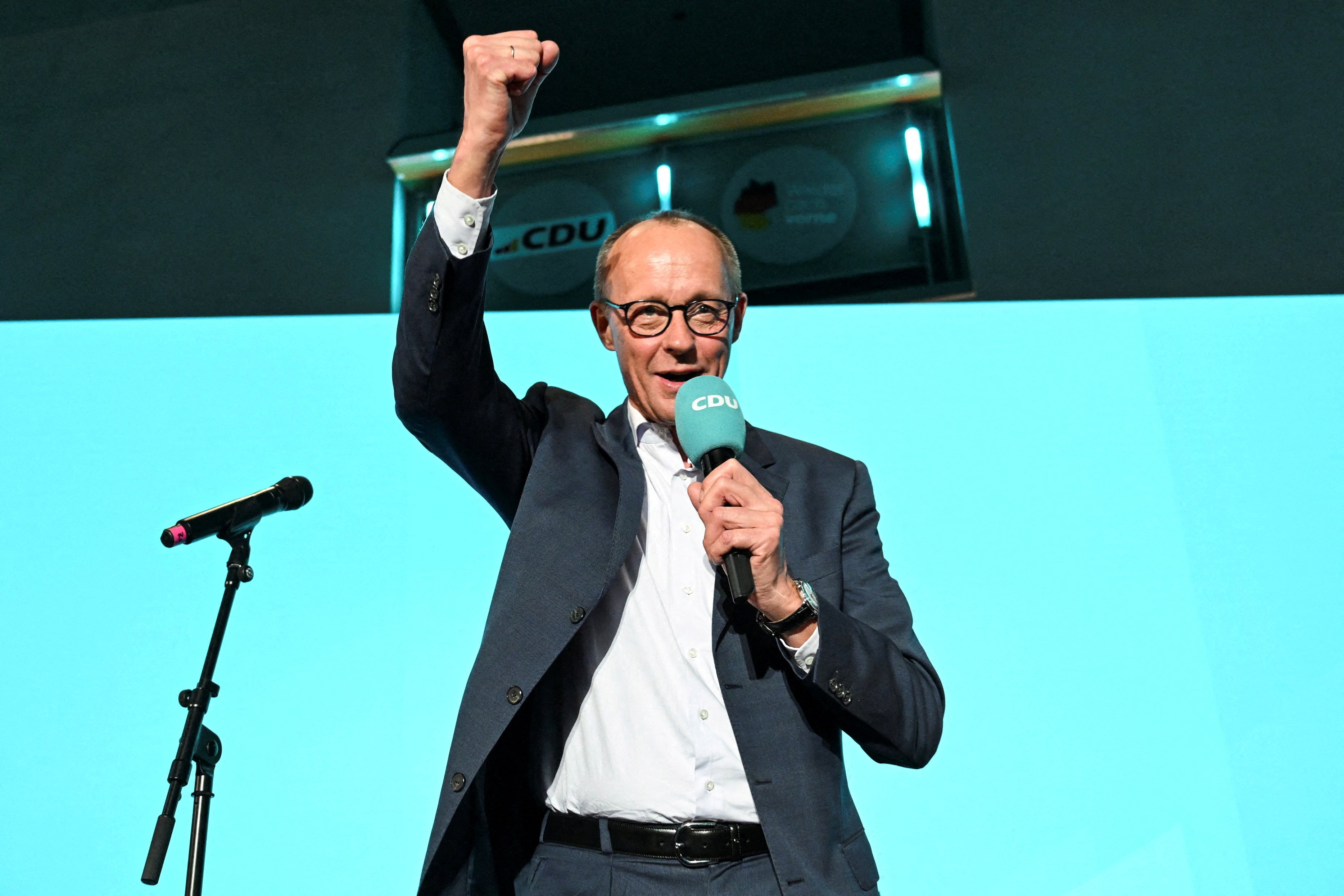
The results released by the electoral authority showed Mr Merz’s Christian Democrats and the center-left Social Democrats winning a combined majority of seats in the national legislature after small parties failed to make the electoral threshold.
That gives Mr Merz the best chance of becoming the country’s next chancellor. He said on election night that he hopes to form a government by Easter at the latest.
He has ruled out a coalition with the far-right Alternative for Germany, or AfD, which is now the country’s second-largest party after its best showing ever.
Namita Singh24 February 2025 05:34
Merz questions longevity of Nato’s ‘current form’
Germany’s likely next chancellor Friedrich Merz questioned whether Nato would remain in its “current form” by June in light of the comments by US president Donald Trump’s administration, and that Europe must quickly establish an independent defence capability.
“I would never have thought that I would have to say something like this in a TV show but, after Donald Trump’s remarks last week…it is clear that this government does not care much about the fate of Europe,” Mr Merz told German public broadcaster ARD after his conservatives won a national election.
Last week, the Trump administration shocked European allies by telling them they must take care of their own security and rely less on the United States, while announcing talks with Russia to end the war in Ukraine without involving Europe.
US Secretary of Defence Pete Hegseth warned Europeans “stark strategic realities” would prevent the US from being primarily focused on the security of Europe.
Referring to a Nato summit scheduled for June, Mr Merz said he was curious to see “whether we will still be talking about Nato in its current form then or whether we will have to establish an independent European defence capability much more quickly”.
On Friday, Mr Merz told public broadcaster ZDF that Germany would need to come to terms with the possibility that Mr Trump might not stick with Nato’s mutual-defence pledge unrestrictedly.
He said this meant that Berlin might need to become less reliant on the US with regard to their nuclear umbrella, too, and advocated talks with Europe’s nuclear powers France and Britain about an expansion of their nuclear protection.
Namita Singh24 February 2025 05:32
A delighted far-right party expresses desire to support Merz
The co-leader of the anti-immigration Alternative for Germany, or AfD, projected to win about 20.5 per cent votes, told cheering supporters that “we have achieved something historic today”.
“We are now the political center and we have left the fringes behind us,” said Tino Chrupalla. The party’s strongest previous showing was 12.6 per cent in 2017, when it first entered the national parliament.
The party’s candidate for chancellor, Alice Weidel, said it is “open for coalition negotiations” with Friedrich Merz’s party, and that “otherwise, no change of policy is possible in Germany”.
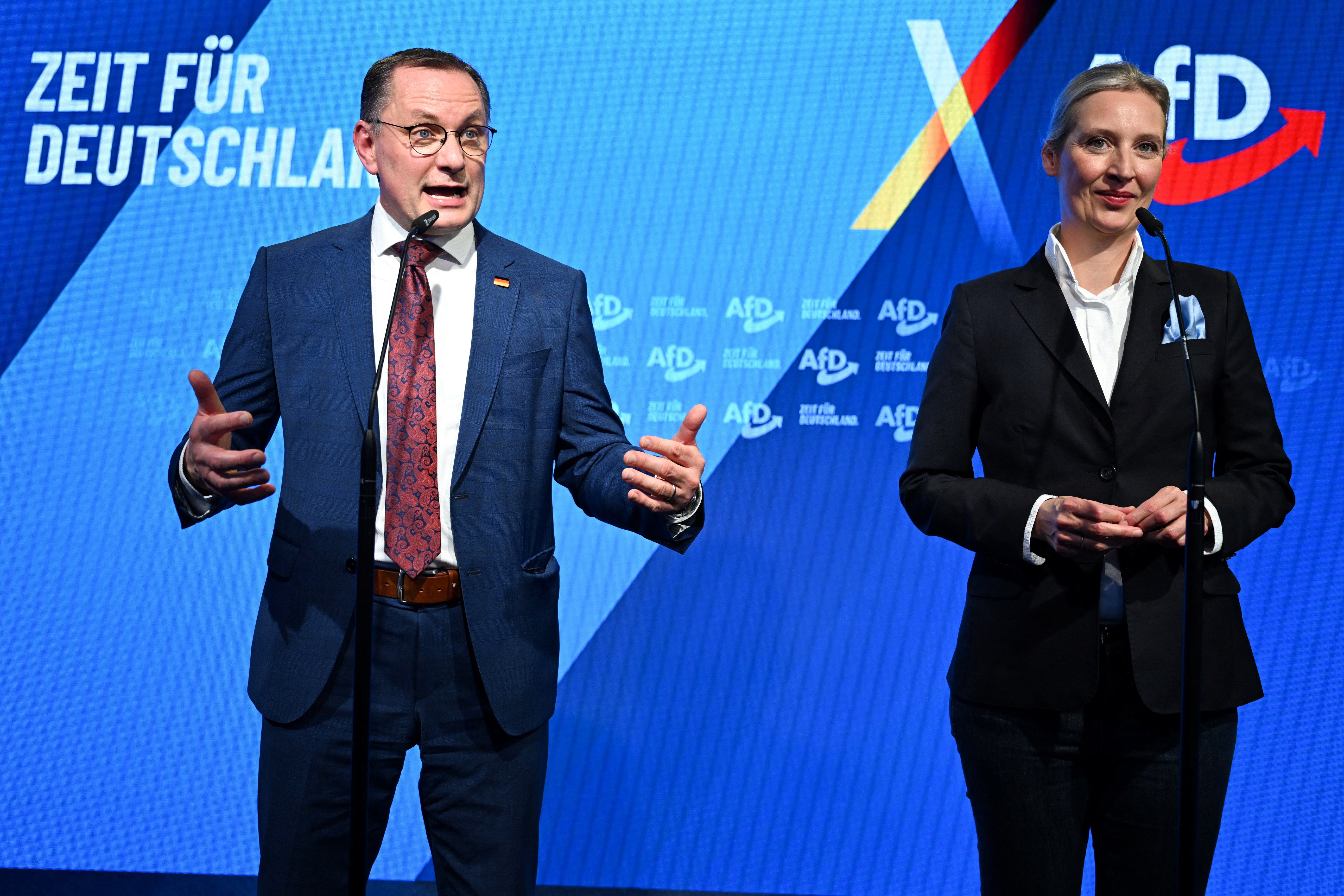
Mr Merz has repeatedly ruled out working with AfD, as have other mainstream parties — and did so again in a televised post-election exchange with Ms Weidel and other leaders.
Ms Weidel suggested AfD wouldn’t have to make many concessions to secure a theoretical coalition, arguing that the Union largely copied its programme and deriding its “Pyrrhic victory”.
“It won’t be able to implement it with left-wing parties,” she said. If Mr Merz ends up forming an alliance with the Social Democrats and Greens, “it will be an unstable government that doesn’t last four years, there will be an interim Chancellor Friedrich Merz and in the coming years we will overtake the Union”.
Mr Merz dismissed the idea that voters wanted a coalition with AfD. “We have fundamentally different views, for example on foreign policy, on security policy, in many other areas, regarding Europe, the euro, Nato,” he said.
“You want the opposite of what we want, so there will be no cooperation,” Mr Merz added.
Olaf Scholz decried AfD’s success. He said that “that must never be something that we will accept. I will not accept it and never will”.
Namita Singh24 February 2025 04:12
Greens advise Merz to moderate his tone
The Greens’ candidate for chancellor, vice chancellor Robert Habeck, said that Friedrich Merz would do well to moderate his tone after a hard-fought campaign.
“We have seen the center is weakened overall, and everyone should look at themselves and ask whether they didn’t contribute to that,” said Mr Habeck.
“Now he must see that he acts like a chancellor.”
The Greens were the party that suffered least from participating in Mr Scholz’s unpopular government. The Social Democrats’ general secretary, Matthias Miersch, suggested that their defeat was no surprise — “this election wasn’t lost in the last eight weeks.”
Namita Singh24 February 2025 03:58
Merz struggle to establish viable government
Whether Friedrich Merz will have a majority to form a coalition with Olaf Scholz’s Social Democrats or need a second partner too, which would realistically have to be the Greens, will depend on whether the Sahra Wagenknecht Alliance or BSW gets into parliament.
While Mr Merz’ party is projected to receive 28.5 per cent votes, the exit polls put Mr Scholz’s Social Democrats at just over 16 per cent and Greens at about 12 per cent.
The Sahra Wagenknecht Alliance , or the BSW is around five per cent.
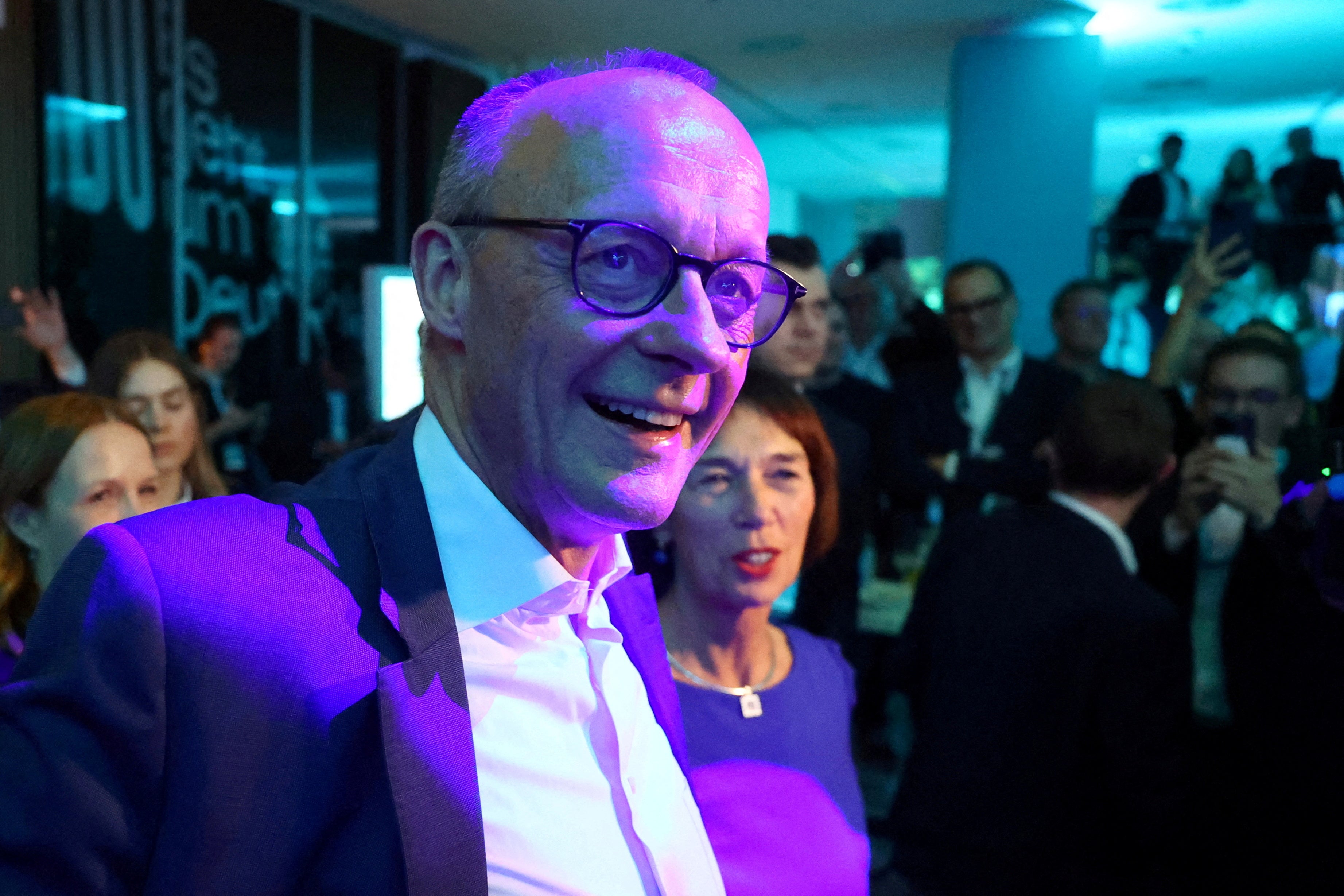
The conservative leader said that “the most important thing is to re-establish a viable government in Germany as quickly as possible”.
“I am aware of the responsibility,” Mr Merz said. “I am also aware of the scale of the task that now lies ahead of us. I approach it with the utmost respect, and I know that it will not be easy.”
“The world out there isn’t waiting for us, and it isn’t waiting for long-drawn-out coalition talks and negotiations,” he told cheering supporters.
Namita Singh24 February 2025 03:38
What led to Scholz’ fall
The election took place seven months earlier than originally planned after Olaf Scholz’s unpopular coalition collapsed in November, three years into a term that was increasingly marred by infighting. There was widespread discontent and not much enthusiasm for any of the candidates.
The campaign was dominated by worries about the years-long stagnation of Europe’s biggest economy and pressure to curb migration — something that caused friction after Friedrich Merz pushed hard in recent weeks for a tougher approach. It took place against a background of growing uncertainty over the future of Ukraine and Europe’s alliance with the United States.
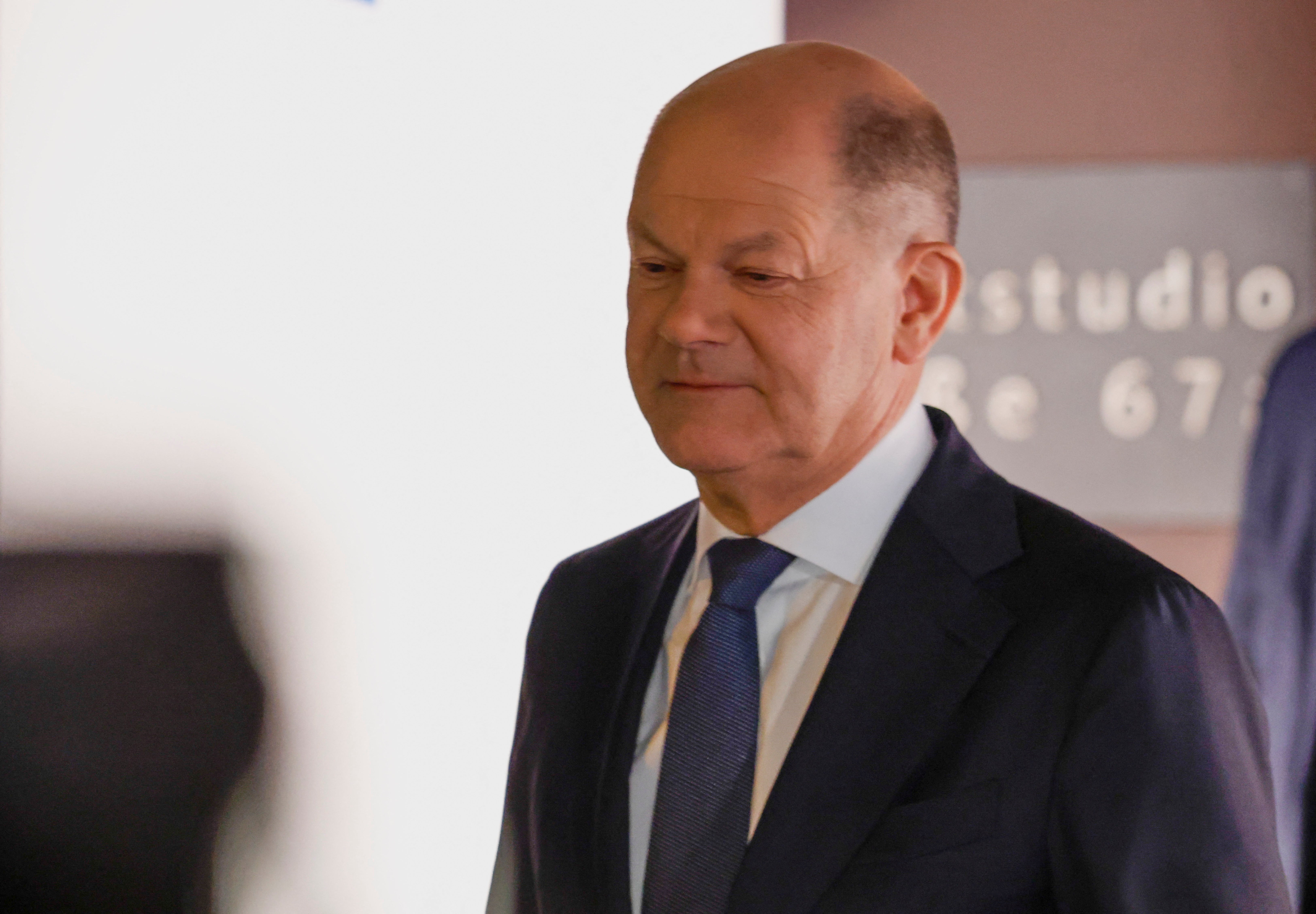
Germany is the most populous country in the 27-nation European Union and a leading member of Nato. It has been Ukraine’s second-biggest weapons supplier, after the US. It will be central to shaping the continent’s response to the challenges of the coming years, including the Trump administration’s confrontational foreign and trade policy.
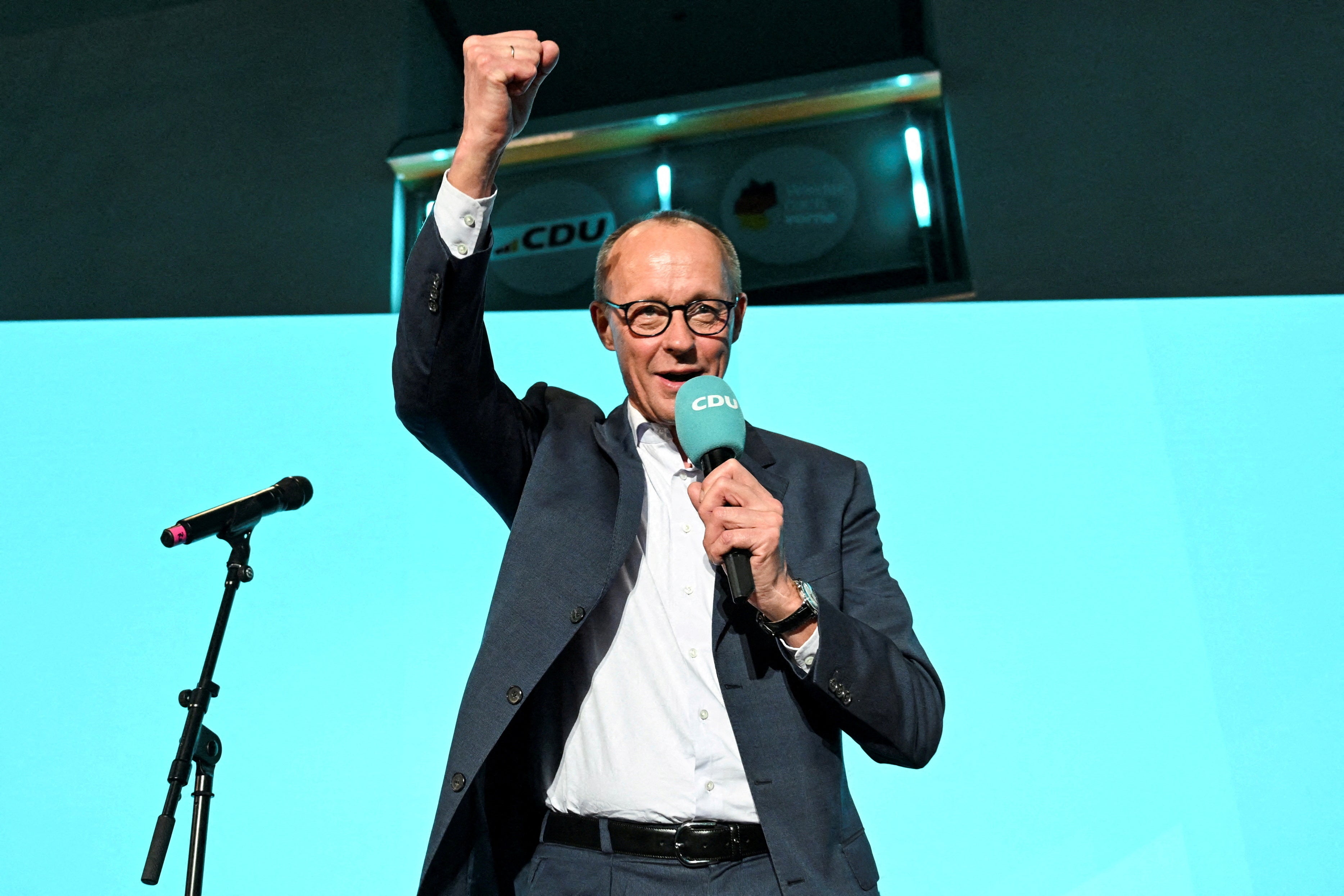
The projections, based on exit polls and partial counting, put support for Mr Merz’s Union bloc around 28.5 per cent and the anti-immigration Alternative for Germany, or AfD, about 20.5 per cent — roughly double its result from 2021.
They put support for Mr Scholz’s Social Democrats at just over 16 per cent, far lower than in the last election and below their previous post-war low of 20.5 per cent from 2017. The environmentalist Greens, their remaining partners in the outgoing government, were on about 12 per cent.
Out of three smaller parties, one — the hard-left Left Party — strengthened its position, winning up to nine per cent of the vote after a remarkable comeback. The pro-business Free Democrats, who were the third party in the collapsed government, looked likely to lose their seats in parliament with about 4.5 per cent. The Sahra Wagenknecht Alliance, or BSW, was hovering around the five per cent threshold needed to win seats.
Namita Singh24 February 2025 03:23
Olaf Scholz concedes defeat
Germany’s conservative opposition leader Friedrich Merz won a lackluster victory in a national election while Alternative for Germany doubled its support in the strongest showing for a far-right party since World War II, projections showed.
Chancellor Olaf Scholz conceded defeat for his center-left Social Democrats after what he called “a bitter election result”.
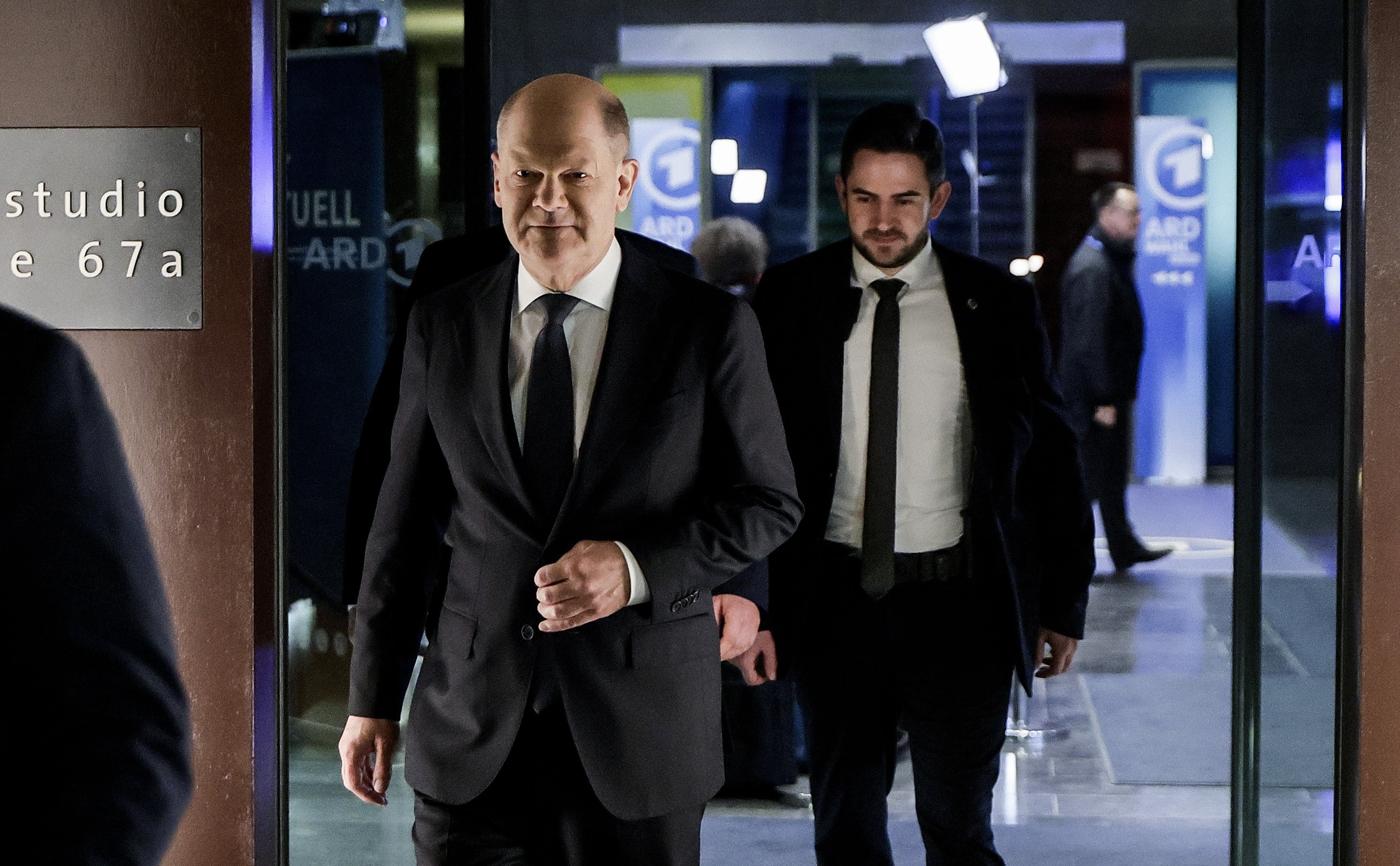
Projections for ARD and ZDF public television showed his party finishing in third place with its worst postwar result in a national parliamentary election.
Mr Merz said he hopes to put a coalition government together by Easter.
Namita Singh24 February 2025 03:04
Watch: Far-right AfD supporters in Germany cite rising crime and social changes as reasons for support
Tara Cobham24 February 2025 03:00
‘I am aware of responsibility and scale of task ahead,’ says Merz
“I am aware of the responsibility,” Friedrich Merz has said as he claimed victory in Germany’s election.
“I am also aware of the scale of the task that now lies ahead of us. I approach it with the utmost respect, and I know that it will not be easy.”
“The world out there isn’t waiting for us, and it isn’t waiting for long-drawn-out coalition talks and negotiations,” he told cheering supporters. “We must now become capable of acting quickly again.”
Tara Cobham24 February 2025 02:30
AfD both drove and harnessed hardening attitudes towards migration in Germany
Attitudes towards migration in Germany have hardened, a profound shift in German public sentiment since its “Refugees Welcome” culture during Europe’s migrant crisis in 2015, that the AfD has both driven and harnessed.
Germans are also more pessimistic about their living standards now than at any time since the financial crisis in 2008.
Tara Cobham24 February 2025 02:00